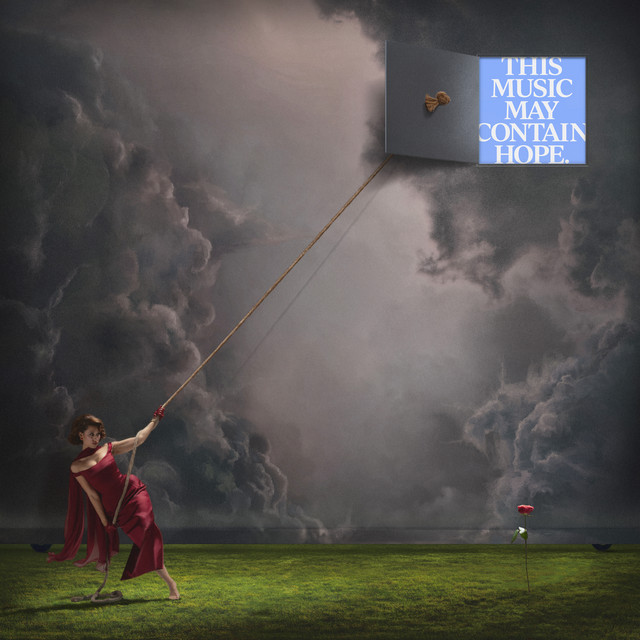
On April 24, 2026, Noah Kahan released his fourth studio album, “The Great Divide.” Featuring singles “The Great Divide” and “Porch Light,” the album reflects on Kahan’s growing emotional distance from his small-town Vermont roots. Although not without its flaws, “The Great Divide” feels like a perfect continuation of “Stick Season,” while also serving as a subtle step forward towards a more mature sound.
The album opens up with a gorgeous piano ballad in “End of August.” Instrumental moments pulse throughout the song, with ambient night sounds of bugs chirping underneath. It’s a haunting start to the album, washed with the warmth of a late summer night, while also reminding listeners that nothing lasts forever. Kahan wanders down a nostalgic route in lines like “Woah, everythin’ you see out hеre will die / Oh, it’s a matter of time / ‘Til it’s fields of ice and reflector lights,” using the end of summer as a metaphor for emotional endings.
Following is “Doors,” a more upbeat yet introspective song in which the energy starts to pick up. With full honesty, Kahan reveals an uglier side to himself, as he brings up the psychological “doors” that he can’t bring himself to open. He doesn’t shy away from imperfection in the stories he tells, and that’s what makes the album feel so human. This self-reflection continues throughout the album with recurring mentions of a lead character driving, something that doesn’t feel coincidental and links the tracks “American Cars,” “Downfall,” “Paid Time Off,” “Dashboard” and “Headed North” into one long, continuous drive. The album ultimately becomes a journey, where Kahan’s perpetual state of transition between past and future places him squarely within “the divide” itself.
The title track proves its worth as a hit single. In sweeping melodies, the heart of the album explores unspoken distances with an old childhood friend. Lyrically, it feels like Kahan’s most personal, with lines like “I hope you sеttle down, I hope you marry rich,” illuminating a clear emotional distance between him and his former friend. The theme of fractured relationships is also seen in the gentler “Porch Light,” the album’s second single. Driven by the mandolin, the chorus soars heartbreakingly as he sings from the viewpoint of his mother waiting for his return.
At times, the album’s emotional beat does grow stale. “Haircut,” “Willing and Able” and “Dashboard” feel like a redundant stack, revisiting the same sentiment of Kahan leaving his town and then wrestling with guilt. And although “Deny Deny Deny“ leans into a refreshing rock-influenced sound, other songs, such as “Headed North” and “Spoiled,” come across as more forgettable and less musically impressive.
Nonetheless, Kahan quietly concludes “The Great Divide” with “Dan,” one of the more uplifting songs of the album. A tribute to his real-life childhood friend, the song represents how the simplest friendships can bring genuine happiness. Being with someone who understands you and realizing that’s enough is what seems to be the point of the album, and by the end of the journey, everything falls into place with “Dan.”
Kahan’s extended version also introduces four new tracks, thoughtfully placed throughout the album rather than tacked onto the end. “Orbiter”’s stunning acoustic tune infuses intimacy into the narrative, while the long-awaited “Staying Still” stands out as an explosive blend of angst and yearning. Each song felt like it had its own home in the record and added much to the album’s emotional arc.
Through “The Great Divide,” Kahan attempts to bridge emotional chasms and, in the process, the divide between his current songwriting and that of “Stick Season.” The album is startlingly long and repetitive with its ideas at times, but it doesn’t try to be perfect. Kahan has a clear sense of place that grounds his songs, and that, in turn, sharpens his sound, allowing him to push beyond his past songwriting to produce his best work to date.