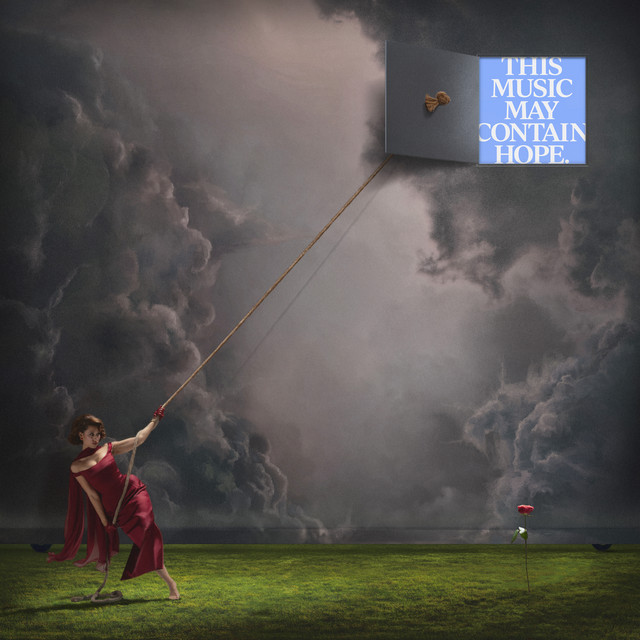
After redefining modern British R&B with her debut album, “My 21st Century Blues,” singer-songwriter RAYE has returned to the music scene with her deeply personal and wildly ambitious sophomore project, “THIS MUSIC MAY CONTAIN HOPE.” Released on March 27, 2026, the album marks a continuation — and reinvention — of her artistry.
After the triumph of her first studio album, which earned her a remarkable six Brit Awards, many began to wonder how on earth RAYE could possibly retain that level of success. However, “THIS MUSIC MAY CONTAIN HOPE” does the seemingly unlikely, securing RAYE her first-ever No. 1 on the Official Albums Chart. The position signifies RAYE’s second major chart-topper of the year, following “WHERE IS MY HUSBAND!” becoming the first Official Singles Chart No. 1 of 2026.
From the get-go, it’s clear how much this album pushes against the lethargic beats and monotony of the modern music scene with an air of dramatic orchestral grandeur. The sheer uniqueness of the album’s sound is evident in the opening track, “Intro: Girl Under the Grey Cloud,” a narrated song that reads like a screenplay. The lyrics paint a vivid picture of a lonely, intoxicated girl strolling the streets of Paris beneath heavy skies and an even heavier inner turmoil. The background music mirrors the cinematic framing, combining 1950s-style instrumental arrangements with sharp, high-pitched violins. Together, they create a sense of instability and suspense, as if the opening scene of a movie were unfolding before our very eyes.
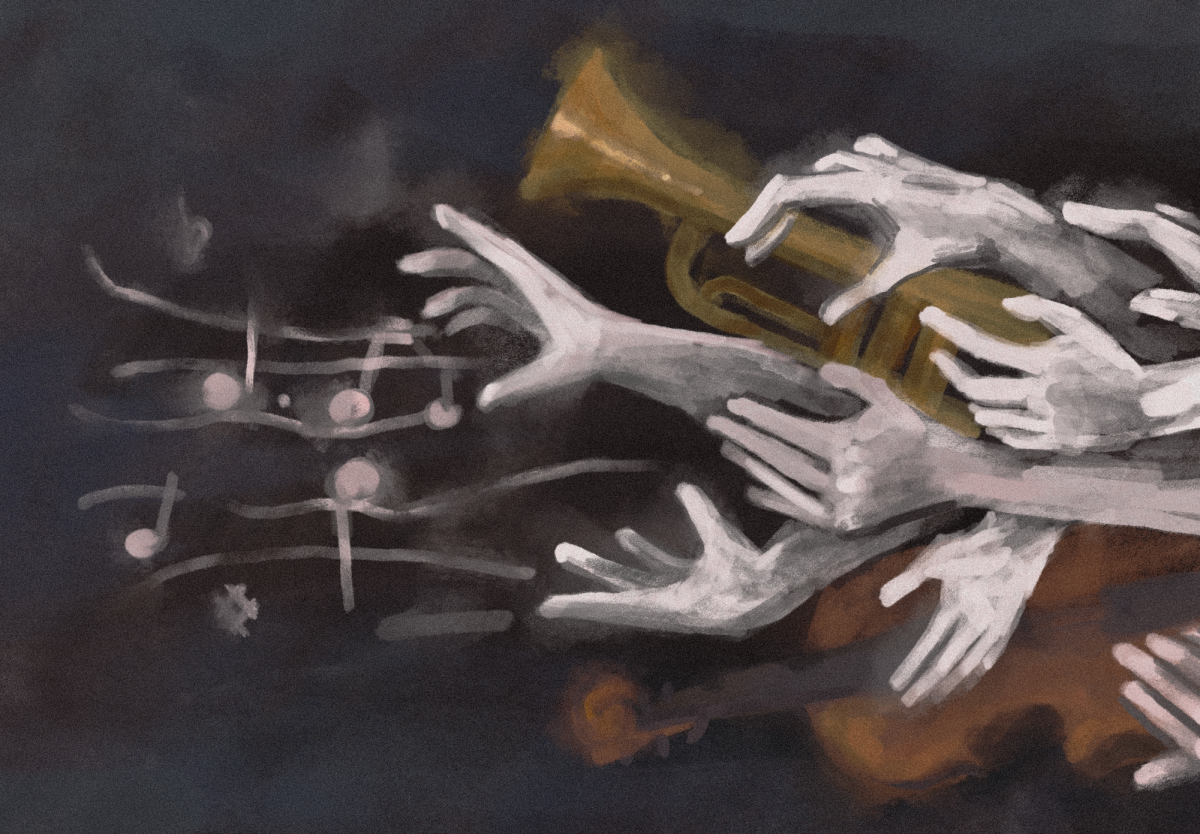
That sense of cinematic immersion is carried across the album’s full runtime. Yet, for all its length, “THIS MUSIC MAY CONTAIN HOPE” is intentionally expansive. The structure of the album itself leans into the filmesque nature of the production, as a four-act narrative that carries the protagonist through four different seasons. The first portion of the album’s production is brassy and layered in tracks like “I Will Overcome.” and “Beware.. The South London Lover Boy.,” relentlessly launching into the next riveting song while experimenting with melancholic themes.
The second quarter conjures an introspective atmosphere, yet the tracks remain dynamic — “Winter Woman.,” for example, bounces from haunting to frantic to metallic, sampling Vivaldi’s “Winter.” The third set of melodies serves as a thawing period, where the cold of winter gives way to warmer, retro soul and R&B sounds, including one of the most remarkable songs on the album, “Goodbye Henry.”
The album concludes with a euphoric summer glow. It’s upbeat and celebratory, featuring the single “WHERE IS MY HUSBAND!” while other tracks like “Fields.” hold a gospelly undertone that bathes the listener in sunshine. Together, they showcase that this album truly does contain hope, complete with grand, celebratory music featuring RAYE’s sisters Amma and Absolutely, as well as her songwriter grandfather.
The theatricality of the project is reinforced by its vocal execution. RAYE has been consistently praised for her powerhouse vocals, her mezzo-soprano voice characterized by its warm, soulful tone and the ability to glide seamlessly between delicate, fluttering phrases and powerful, sustained belts. Her work feels like a complete experience, evoking emotional intensity that envelopes its listeners in a fully immersive experience. Each note hit feels controlled yet volatile, as if every track is a like stage performance rather than a playback recording.
To pair with her captivating and dynamic range, “THIS MUSIC MAY CONTAIN HOPE.”’s beautiful lyricism warrants equal merit. RAYE’s words have the power to stir multiple feelings at once and invite the listener to look inwards for understanding, with evocative and poignant framing. The writing assumes a diaristic nimbus but is a far cry from juvenality, tackling themes of heartbreak and angst with maturity and grace. The culmination of these factors gives the project a cohesive feel, where each track contributes to the broader emotional arc rather than existing in isolation from one another. Yet, even in all its connectedness, the tracks are so distinct sonally that each one could’ve easily been the chosen lead single.
Additionally, contributions from prolific figures like the legendary composer Hans Zimmer and 11-time Grammy winner Al Green deepen the album’s sonic palette, a blend of theatrical splendor with classic soul that stirs up a soul-soothing concoction. Remarkably, these influences sit atop RAYE’s vision without overshadowing it, adding texture and historical depth to an already layered production style.
All in all, “THIS MUSIC MAY CONTAIN HOPE.” deserves to go down as a pioneer in all things production. Its depth positions itself as a defining artistic statement within contemporary pop, and it allots hope to those worn down by the stormy chaos of today’s world, channeling its creative prowess into medicine for the soul. It resists simplicity in favor of scale, and in doing so, gorgeously establishes itself as a work designed not to be heard passively, but experienced in full.