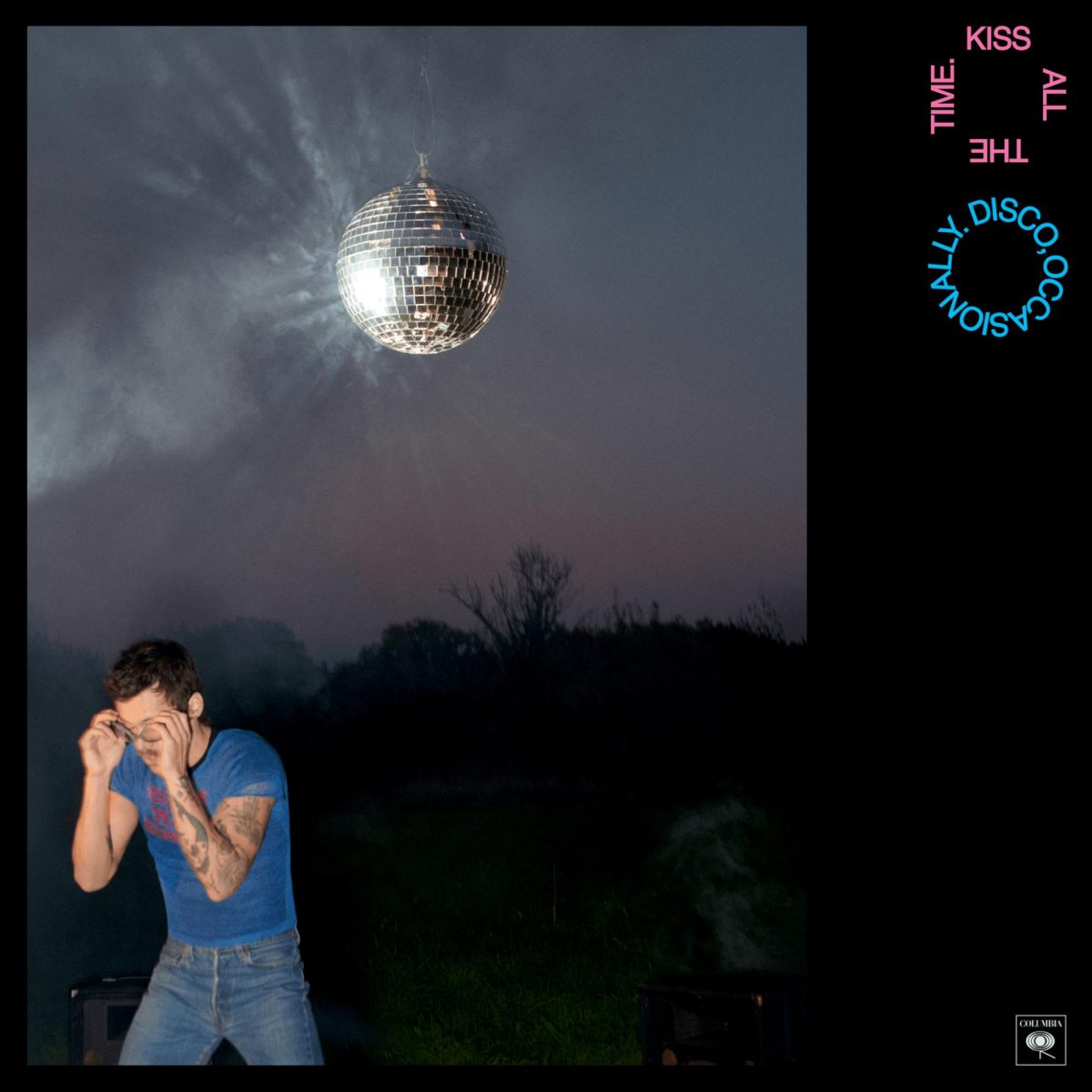
Harry Styles’ new album, “Kiss All The Time. Disco, Occasionally.” is blazing the trail for the comeback of timeless disco. Released on March 6, it was a breath of fresh air in an age of music engineered for the algorithm. Instead of relying on viral hooks or lyrical sound bites to carry each track, the album leans into its musicality. The production is rich in instrumentation, inviting attention to the music as much as, if not more than, the words. It’s a refreshing approach that gives the album a distinct identity. This feels like an album that was made to be listened to all the way through, as it can only be understood as a whole after listening to all of the layers and variances between the songs.
Across his previous albums, Styles has played with rock, folk and retro pop influences. His new work pushes further into that experimentation, blending disco rhythms with orchestral and gospel elements in a way that feels ambitious yet meticulous. Much of that cohesion comes from longtime collaborator Kid Harpoon, who produced the majority of the record and helped maintain consistent direction, as is evident across all the tracks. The faster, more upbeat songs, such as “Pop,” play to a different rhythm than the slower tunes of “Coming up Roses” and “Paint by the Numbers,” but they maintain the same distinctive groove that ties them together so well.
Because of this consistency, the album never feels like a random collection of singles. Even as the tempo shifts between songs, the production style and instrumentation maintain a clear disco identity that makes the project feel carefully constructed from beginning to end.
The album opens with “Aperture,” which sets the tone with piano and a choir that cinematically expands to serve as the introduction to the album. Instead of launching into a more energetic pop opening, it was a digestible and graceful start.
Styles’ personal challenge with the disco influence became especially clear in the songs “American Girls” and “Ready, Steady, Go!” which both relied on smooth bass and drums, allowing for more engagement in the beat than in his words. The drums, played by Tom Skinner, are especially effective at keeping the momentum of the song steady without blatantly overpowering the other sounds.
One of the album’s most distinctive qualities, however, was its use of the violin. “Coming Up Roses” felt almost bridal, attributed to the full orchestra that is apparent throughout the song. This made it the most memorable track and immediately elevated the song into a classic, separating it from Styles’ past tendency to lean into gimmicky social media content. Even on “Taste Back”, the violin added a layer of elegance that made the songs feel full and almost hypnotic, a detail that’s bound to either pull listeners in or put them to sleep, depending on how long they listen.
Strings are rarely used this prominently in modern pop music, which makes their presence here feel especially intentional. The violin softens the sharper disco rhythms and gives several songs a timeless quality; instead of sounding like something designed purely for streaming charts, these arrangements feel carefully crafted and cinematic.
Interestingly, the lyrics often felt secondary to the instrumentation. Styles explored the familiar themes of relationships and uncertainty, but he was difficult to hear over the instrumentals. The only exception is when he repeated the title phrase of “Are You Listening Yet”, which wasn’t enjoyable.
In some ways, this feels intentional. By allowing the instrumentation to take the spotlight, the album becomes less about lyrical storytelling and more about the overall musical atmosphere. The result is a listening experience that is more nuanced than simply hearing the words, because they can be felt as well.
Perhaps it was the low volume of Styles’ voice or the almost auto-tune-like blend around it that allowed it to flow into the background, almost functioning as another instrument. Relative to his rather obnoxious “Watermelon Sugar”-style songs (which I can’t bring myself to listen to), this was a happily welcome change for my ears.
The record closed on a quieter note with “Carla’s Song,” which was a more piano-driven track that strips the production back after so many layered arrangements. Ending the album this way gives the music a reflective quality and reinforces the album’s focus on musical texture rather than showy, overdone spectacle.
Ultimately, “Kiss All the Time. Disco, Occasionally.” succeeds because of the trust it puts in its music. The recurring elements of disco grooves, choir and orchestra create a sound that feels cohesive without getting repetitive. It may not be Styles’ most lyrically memorable work, but musically, it is his most interesting. By giving the instruments room to breathe, he delivered an album that feels immersive — one that anyone can get lost in.