Classical music has long been synonymous with excessive flourish and elitism. Born of higher society’s oppression of lower classes, the genre sits on a lofty pedestal of perceived sophistication that deters younger generations from approaching. In today’s fast-paced music scheme, the genre is more alien than ever before, widely regarded as boring and unapproachable. However, centuries of history have proven time and time again that classical music is worth a listen – if only you’re willing to explore it.
The negative stigma surrounding classical music is a prevailing issue against its name, one that feeds into its other shortcomings. The genre itself originated as an affirmation of social hierarchy in a Eurocentric world. It was composed for and catered to the aristocratic elite, who were also among the few with the time and monetary resources to hone the craft. Today, its classism is perpetuated in the strict formality of performance, its racism is supported by continued European influences and its sexism runs rampant among performers and composers alike. (Case in point – DV’s wind ensembles recently performed at the Chabot College Wind Band Festival. Of the 55 total pieces showcased, only five were composed by female composers.)
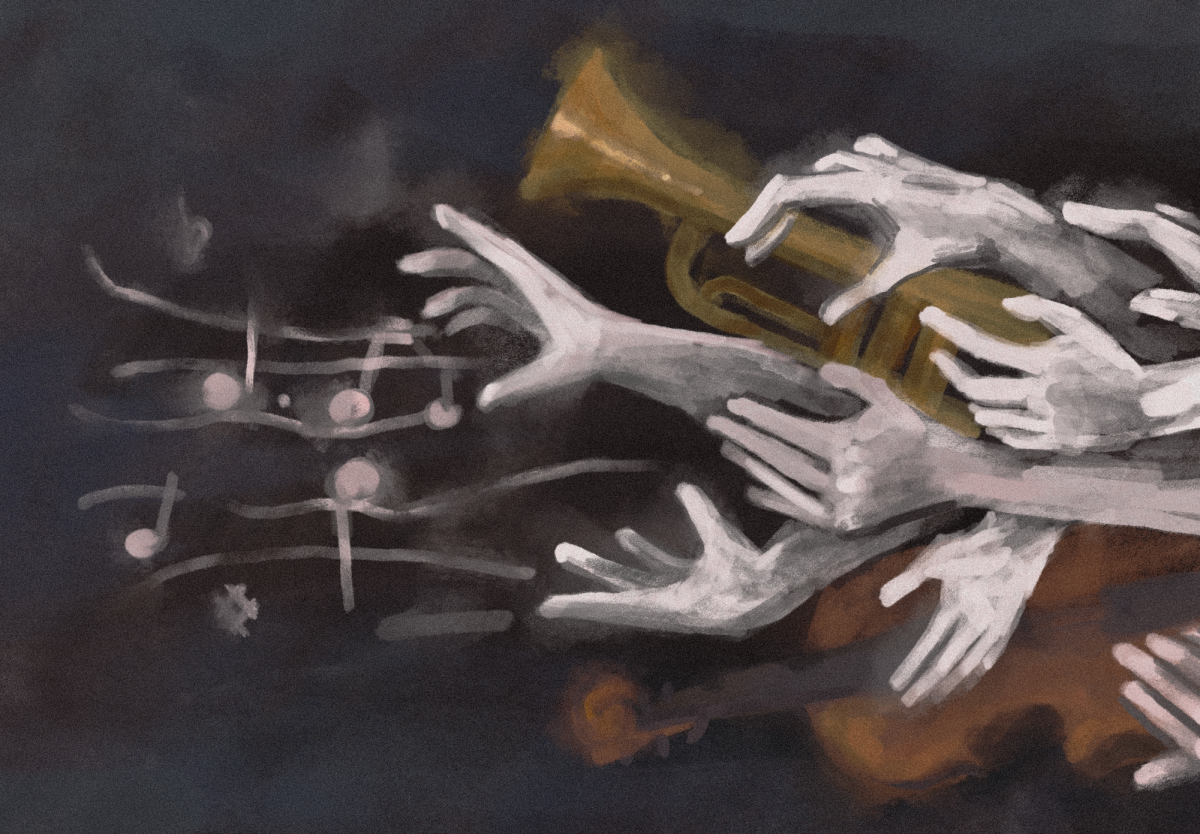
Even apart from its societal implications, classical music is hardly accessible – its structured compositions and complex history, not to mention the years of training necessary to become a performer, all coalesce into an intimidating barrier of exclusivity and intellectualism. The current era of technology and social media further repels modern listeners from classical music, as it rarely aligns with younger generations’ need for rapid consumption and instant gratification. Compared to pop, with its catchy refrains and comparatively simple form, or rock with its invigorating rhythm and predictable harmonies, it’s no wonder which genres are considered more modern.
So is classical music a dying art? An archaic remnant of European colonialism that has only sustained itself through the oppression of the upper class? Can its fate be boiled down to bland white noise in hours-long study playlists of the same five composers, all of whom died two centuries ago?
Okay, that’s a little extreme and wholly untrue. Though its popularity has diminished, classical music is still doing well for itself behind the scenes – just look at the size of DV’s music program! And Mozart might not be played on the radio, but a little nicheness never hurt anyone. After all, music should make people feel something, and classical music is just too hard to understand.
Today, younger generations seek strong emotion and intense relationships in the media they consume, as seen by the obsession with realistic TV and romantasy books. Modern genres of music are defined in part by lyrics that spin a story that hooks listeners in, and through this story, the music evokes those strong emotions that younger audiences seek. In contrast, classical music very rarely has the connection of lyrics, on top of spanning innumerable styles and myriad interpretations of each piece. Doesn’t this mean that classical music is needlessly complex, to the point of taking away from the experience? If it’s so hard to form a connection with the music, what’s even the point of listening?
But let me ask you this: When was the last time you cried during a movie? What was playing in the background? How much would your viewing experience deteriorate without the mounting tension of climbing notes, the frantic beat accompanying a chase, the catharsis of finally reaching the resolving chord? Imagine watching “Interstellar” without its soundtrack. Christopher Nolan loves his lonely shots, from the empty cornfield to the vast silence of space, but it’s Hans Zimmer that fills those scenes with emotion. Revisit the soundtrack by itself, and you’ll hear it – you’ll hear the story brought to life, perfectly timed to ghostly actors and phantom plot beats. Without its organs, “Interstellar” is nothing; without “Interstellar,” the organs still sing.
Movie soundtracks and other instrumentals are a bit of a cheat code to understanding classical music. Soundtracks, along with being both recognizable and digestible, are intimately linked to their originating media and thus intertwined with the emotions of a particular scene or media. It serves the same purpose as the lyrics of modern songs, building a story that allows the listener to connect with the music.
But it doesn’t end there: Now that we’ve established that classical music isn’t just for sociopaths, I encourage you to explore the genre a little deeper. The names Bach and Beethoven have been repeated enough to sound as if they’re the only composers that have ever existed, but that could not be farther from the truth. From the lively dance of Arturo Márquez’s “Danzón No. 2” to the sleazy stroll through George Gershwin’s streets in “An American in Paris” to the violent grief of Dmitri Shostakovich’s “String Quartet No. 8,” the timelessness of classical music presents a terrifyingly vast array of selections that can be suitable for sleep and study, and can be really, really not.
It’s in these many pieces that the audience can learn more about themselves, if only they have the courage to listen for it. Contrary to popular belief, classical music is more accessible now than it has ever been. Music streaming platforms host countless orchestras and performers. Finding similar songs is as easy as exploring playlists made by strangers on the internet, by the Spotify algorithm or by the composer themselves. The range of classical music is not infinite, but it approaches it – finding a soundtrack to your own life is only restricted by your own imagination.