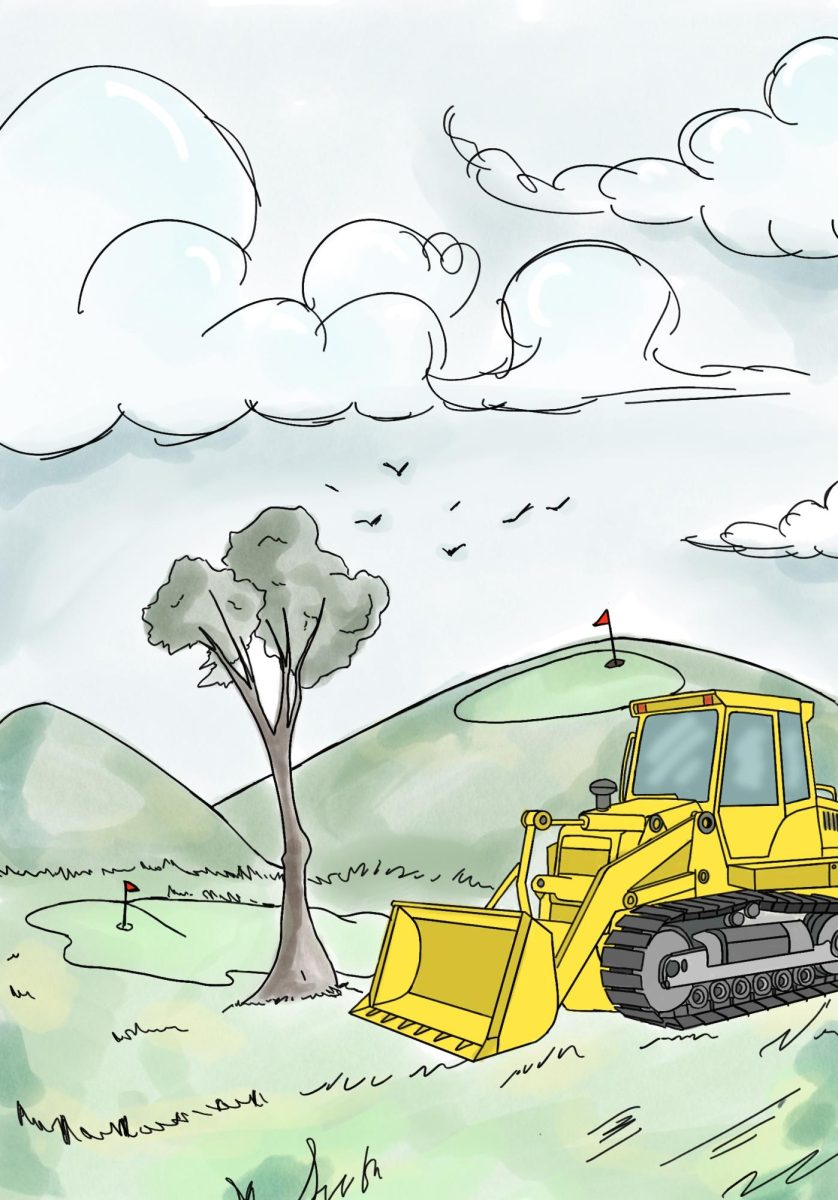
Golf courses are really quite dystopian when you get to the brass tacks: trees cut, pesticides sprayed, soil degraded to the point of complete unusability for anything applicable to human life, aside from of course, golf. Just understanding the basic amount of resources that a golf course consumes by existing is rather grotesque. For example, throughout the US, golf courses use more than two billion gallons, roughly 3,030 olympic swimming pools, of water every single day. All of this just to make sure they stay their shiny and green selves.
It’s not exactly like this water is just “extra” either. Conveniently, no matter how bad any water crisis gets, you can be assured that golf courses will always be considered the top priority in who gets the last of the diminishing water supply. In Salt Lake City, Utah, the same place in which its major water supply, the Salt Lake, has diminished more than 73%, the around 30 golf courses have continued to be irrigated no matter what. The total usage for these courses in Utah totalling nine million gallons of water a day. It sends a clear message. No matter how bad things get, whether air quality decreases year in year out, or when water gets shut down in your area as 93% of your state faces severe drought, the wellbeing of the people is always going to be an after thought. The simple truth is: when it comes to the entertainment and rituals of the same millionaires who run or lobby a state, you will always be considered the equivalent of chopped liver.
When the only reason for their existence boils down to “extra” state revenue, or its “prestigious” history you don’t really have a lot of reason to still exist. A big problem though is how golf courses essentially salt the earth for any development hoping to take place there. Through land easements even when golf courses shut down, and stay abandoned for years, the ability for cities to actually transform them into something useful, like housing or commercial, is almost zero. They maintain “obligations” with these now defunct golf courses to make sure there is literally nothing else built there. They essentially hold cities hostage, either you spend millions of dollars pumping gallons of water into these courses and bailing them out, or you let them die and have this ugly patch of dead grass you are unable to touch for decades.
It’s not just that these golf courses make it harder to build on them after their expiration date, but also a plethora of state laws that adds enough red tape to weigh down any development that tries. It’s not exactly like golf has a sterling clean history either, the PGA is known for its past of extremely racist policies. Asides from the obvious of the PGA’s “Caucasian clause” that meant only white athletes could tour that existed for decades, black athletes were essentially barred from major tournaments up until the 90s. Many of the host courses for the PGA prohibited membership to African Americans. Even now, many of the top and most prestigious golf clubs still do not allow women to be members.
When you really get down to it, you will be hard set on finding ways that golf courses benefit anybody really. Even with property taxes, the bare minimum to “help the people,” let’s just say, is something they share with the millionaires and billionaires who use them. When we look at some of the largest golf courses in the world, let’s take the Los Angeles Country Club, they sit on about nine billion dollars worth of land. That price makes sense if you are sitting on some of the most over valued land in the world, Beverly Hills. But if you assume they would pay the normal valuation in taxes of 60-90 million dollars for that parcel of land you would be surely mistaken. The real figure is closer to 300,000$. The mere existence of these courses means that the city of Los Angeles is losing at least a little less than 60 million every single year. That’s excluding the millions of extra dollars of harm courses do with developmental planning, environmental issues, or walkability. Financially there is little to no reason to even glance at them if that person is somewhat smart with your money.
More than a third of all golf courses have consistently lost money since 2019 in fact. Even inside of the states where golf is the largest, like Florida, municipal golf courses lost around 100 million dollars between the years of 2013 and 2018. If it wasn’t for the dozens of layers of red tape that golf courses have protecting them from their destined and biblical wrath they would have been gone decades ago. And that’s where you start. The problem isn’t about golf itself, it’s everything else that goes into maintaining it as a sport. The cost does not equal the value. If we want to actually make a difference and start using the spoiled and washed up land of golf courses for something beneficial it starts by allowing these courses to be developed. And to kick out the same people keeping courses around out of their position that allows them to protect their past time.