Since DVHS was founded in 2007, the campus and the land surrounding it have changed with the times, a growth that can be seen not just in the buildings, but also in the natural features around campus. As the years have passed, some teachers have identified specific aspects of the environment as particular nuisances.
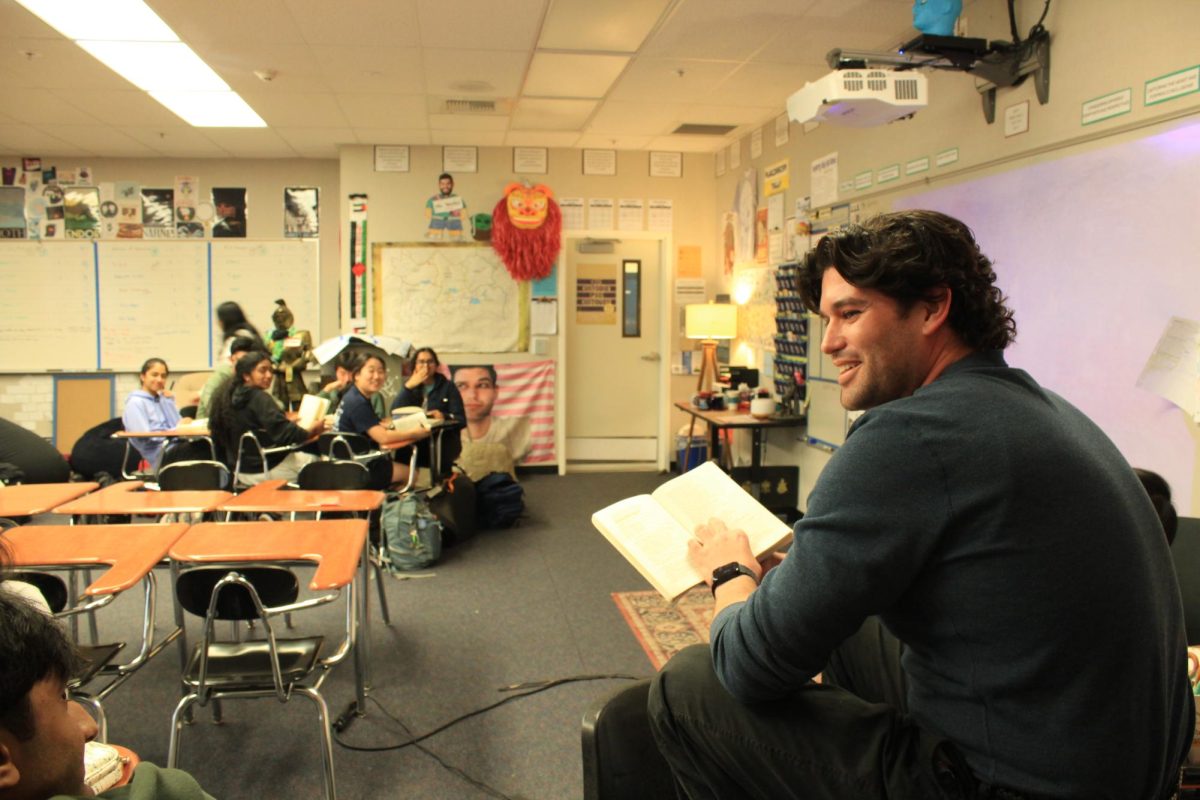
“Allergy season here has always been brutal,” AP European History teacher Andrew Wengel commented. “Lots of tissues and sneezes and things like that.”
Wengel was among some of the first teachers hired at DV. He shared insight on what the campus looked like back then, as well as features in the surrounding area that have changed.
“They’ve put in thousands of homes around the community,” Wengel said. “That’s kind of changed the environment. There was a lot of wildlife here before they built Dougherty Valley.”
According to San Ramon city reports, the population has nearly doubled since the year 2000, from around 44,000 to more than 85,000 people. Wengel suggested that the development of neighborhoods has forced the local wildlife away. Having coached the school football team in 2009, he recalled how animals used to be common additions to game nights.
“Deer would run out and jump in front of our cars when we were going over what is now Windemere Parkway or Old Ranch Road, because all of that was more open space,” he explained. “But now it’s just all houses.”
Wengel also mentioned how the land around DV was likely a ranch, prior to the school’s establishment, which would explain the abundance of wildlife. Band Director Teri Musiel added similar observations from her earlier years at DV.
“There were cows on the hill back there,” Musiel said, gesturing to the incline next to the Performing Arts building. “You could hear them mooing from the band room.”
It’s not just the land surrounding the campus that has changed, but features within the school grounds, as well. Musiel commented on how the trees have grown considerably since the school first opened. Notable ones around campus include London plane trees, with their peeling white bark and fluffy seed heads, as well as Bradford pear trees. The latter currently sports reddened leaves and small, round fruits, though they are iconic in the spring for their white flowers and infamous odor.
“That’s our biggest [problem], the stinky trees,” Musiel joked. “They must be really drought-resistant, because they kept planting them.”
The Bradford pears aren’t the only environmental features seen as a bother around campus. Under the eaves of multiple buildings, particularly on the overhang outside the Wellness Center, barn sparrow nests can be observed. The sparrows usually return to build and occupy nests through the spring.
“They’re cute,” Counselor Technician Dina Sotelo admitted, “but they make a mess, and it seems really unsanitary to me.”
Sotelo also pointed out that the counseling entrance, above which many nests can be seen, is a high-traffic area, which makes her all the more critical of the mud nests and bird droppings.
“It’s not very welcoming, because that door is used for parents coming in, staff from other sites – it’s like a main door,” she reasoned.
Sotelo explained how another school site raised concerns about sparrow nests as well and installed netting to deter nesting. DVHS has put in a similar request for this procedure, which she hopes will encourage sparrows to roost elsewhere next spring.
“They have to do it way in advance,” Sotelo said. “Hopefully, this year, the netting will go up. We put in a request for it.”
Sparrows are among the species protected under the 1918 Migratory Bird Treaty Act, a federal law preventing the disturbance or removal of active nests with eggs and chicks. Other than knocking the nests down over the summer and power-washing the droppings when possible, there’s little to be done about the birds.
“It was their environment,” Wengel said, referring to the general wildlife seen around the school. “And then we built a school there, so they weren’t used to that.”