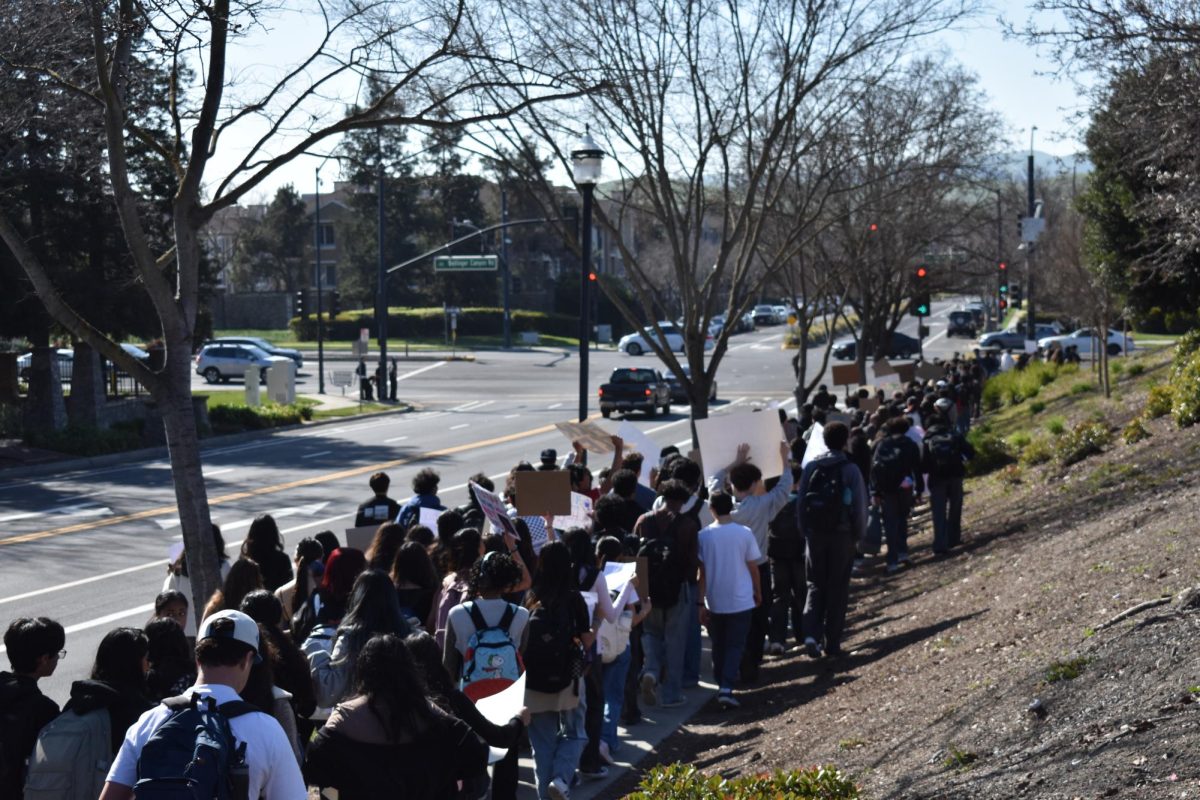
On Feb. 6, 2026, DVHS students took to the streets in protest of the acts of violence committed by the United States Immigration and Customs Enforcement (ICE) following recent civilian shootings.
To participate in the demonstration without facing disciplinary consequences, students were required to have a parent call the school prior to the event so they would be able to secure a leave of absence for the remainder of their classes.
In California, students have legal protection to an excused absence for civic engagement. State law allows middle and high school students one excused absence per year for a civic/political event as long as the school is notified beforehand. Although districts may allow more, they are not required to, and unexcused walkouts can still trigger truancy penalties. While this procedural requirement allows participation, it also places a key limitation on student activism, as students’ ability to engage politically ultimately hinges on parental approval. And for many students, gaining that approval is not simple.
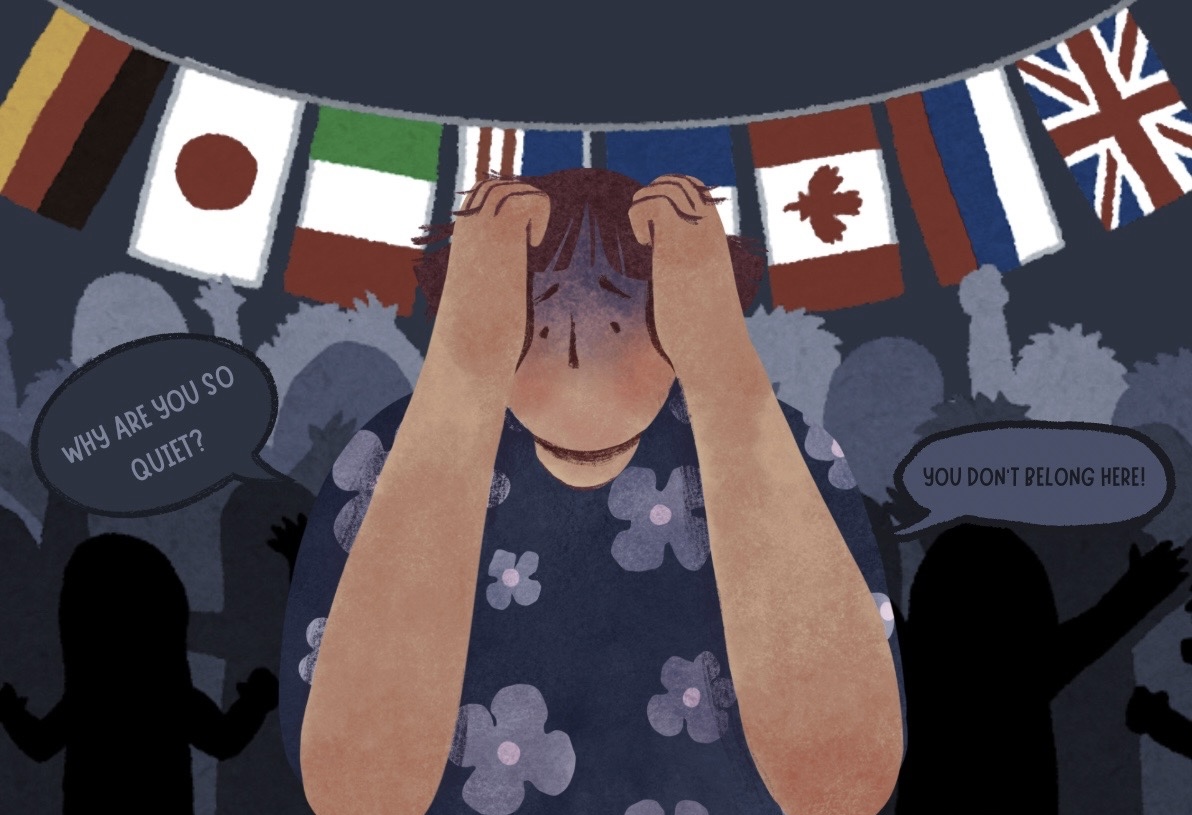
“My parents and I had a lot of arguments about [going to the walkout], where they were afraid of my face being put on the internet. So definitely, they were scared for all the lack of safety,” stated sophomore Asmitha Ottikunta. “And it took so much, so much to convince them that this is what I believe in.”
Ottikunta described herself as the most politically engaged person in her household. “My parents definitely share the same opinions on politics as me, but they tend not to be as vocal as I am about it. I believe some of that fear for them stems from the atrocities being committed against immigrants currently in this country. My parents are immigrants, so I think some of that fear resides in them.”
Her experience brings to light the issue of how parents must vaigate supporting their children’s beliefs while also weighing potential risks and safety concerns. Some parents, however, see activism as an essential part of student development.
Saira Nazir, the mother of two DV students who attended the walkout, emphasized the importance of encouraging early civic engagement.
“Advocating for yourself or other groups in need, I think, shows critical thinking skills. So I think it’s really good that students start to advocate for other people early, early on, even earlier than high school,” Nazir relayed.
Research supports the idea that parents play a defining role in shaping how young people engage politically. According to Dr. Nicole McAninch, clinical associate professor of child and family studies, “Even as children develop into adulthood and go to the polls for the first time, politics and willingness to speak about political views continue to be impacted by child-parent relationships.”
Nazir acknowledges this influence and believes in a parental approach that allows students space to form their own perspectives.
“Kids should have an open mind, do their own research, dig deeper into information, really find that information on their own, and develop their own opinions to understand what’s going on around them,” Nazir stated. “Since children inherit the views of their parents, I think parents should model that behavior by doing thorough research before they adopt opinions, and then showing their kids how to do the same thing.”
Yet even among parents who support student participation, safety remains a commonly cited concern.
“I mean, whenever anybody goes out there to protest there’s always another side protesting, right?” Nazir mentioned. “Sometimes things can get a little violent or scary, so you’re always worried about that. So you have to prepare your kids about how to stay safe, how to know when to get out of the situation before it gets worse, and you know how to just make sure they’re taking care of their safety first.”
Other parents take a more cautious stance on student activism, questioning whether high school students are equipped to participate in demonstrations at all.
“I don’t think high school students, especially younger than 18, should have a say, because they aren’t entirely aware of what’s happening in society, I don’t think they should be participating in such protests,” stated Kanya Marpu, the parent of a DV sophomore. “You don’t have the needed exposure, or the background, and you might get on the wrong side of things. The age for elections is 18, right? If a person is not deemed to be eligible to vote, there’s a reason for this age limit, so these rules should be applied for the political engagement of minors as well.”
For Marpu, the issue extends beyond political awareness to include decision-making in high-pressure situations.
“If you participate in such events, and something were to happen, you have to make instant decisions to protect yourself. I don’t think kids at that age will have that awareness to make those quick decisions.” she remarked.
Marpu also commented on her concerns around whether students are fully equipped to engage with complex political issues at their age.
“Security definitely is a concern as a parent, but I think it’s just getting unnecessary, getting involved in things that you might not have a proper understanding of and it’s just it might impact in a negative way, more than causing any or doing any good.”
However, Marpu is not entirely against activism for youth, recommending alternative methods to get your voice heard.
“There are definitely ways that they can express themselves. I mean, definitely we don’t want everyone to be quiet and then not participate in the social events, right? Then, no way society is going to change. But students under 18 should refrain from these things. I think protesting on the streets isn’t productive, especially for high schoolers. If those incidents are right, if there are strikes, there is firing, you know, it could get into some violence and there could be some violence consequences from such protests. They can send letters or emails. Use social media right to create awareness that those would be better and safer options.”