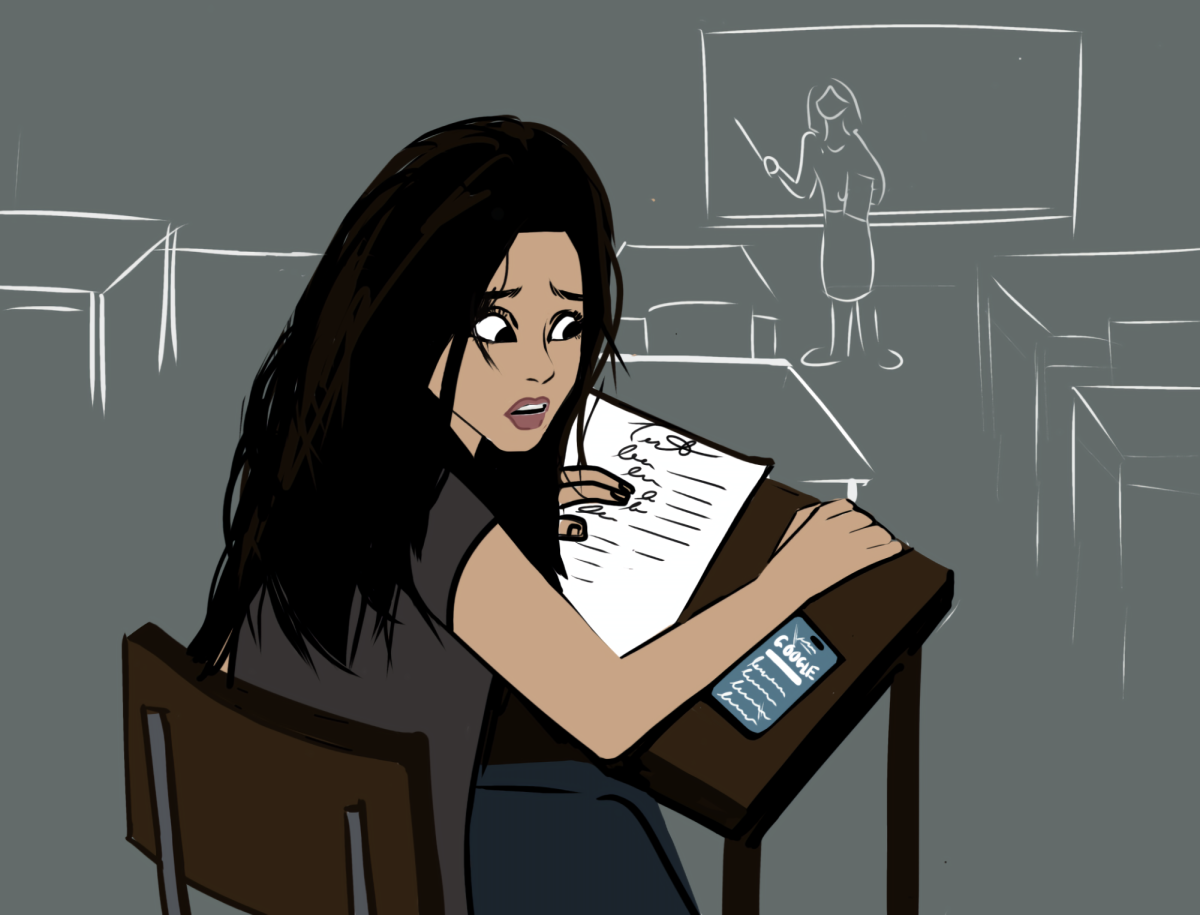
In recent years, various concerns regarding cheating culture at DV and other schools have grown, eliciting strong reactions from students and staff alike.
“Unfortunately, the lack of academic integrity at our school is a big issue,” Honors Physics and Chemistry teacher Andy Su remarked. “A lot of students who get away with cheating feel emboldened to do it more, and they will keep doing it until they get caught, if they ever do end up getting caught.”
According to a study published April 6, 2026 by Discovery Education, over 80% of high-achieving high school students admit to cheating in some way. Even within DVHS, group chats circulate leaked exam papers, camera-fitted pens have been used to record test papers and teachers have noted extreme usage of AI in student writing.
“I joined the DVHS staff as an assistant principal in 2019 and the student handbook section on academic dishonesty gets edited and updated every single year with new information from cheating situations that our teachers might have encountered the previous year,” Principal Lauren Falkner stated. “Based on that alone, I’d say that academic dishonesty has increased since I became an assistant principal here in 2019.”
The prevalence of academic dishonesty at DVHS is sustained in part by how students determine for themselves what does or doesn’t constitute cheating. For example, students tend to overlook or downplay dishonesty when it comes to assignments they don’t view as holding significant importance.
“Usually, for assignments that hold such little weight and do basically nothing to your grade, you want to put in as little effort as possible so you can devote your time to more important things,” another anonymous student admitted.
On the contrary, teachers argue that academic dishonesty of any kind warrants punishment.
“The biggest disconnect is that a lot of students have the point of view that it is only cheating if they get in trouble,” Su said. “The teachers believe strongly that you need to have integrity, and it is cheating whether you get caught or not. If you use dishonest means to get a higher score, it’s cheating, no matter how important the student thinks the assignment is or isn’t.”
Students and staff alike have noticed a trend of prioritizing grades over genuine learning. This raises broader questions about how the academic environment and culture today define success.
“With the different intense academic pressure, students tend to forget their integrity in order to pursue the grade they want, which then they think will get them into the college they want, which will then get them to the job that they want,” Justin Worley, AP Literature and Sci-Fi and Fantasy Literature teacher, said. “Modern American schooling has trained students to treat school like you’re jumping through hoops.”
Despite the increasing prevalence of academic misconduct, there are still students who stress the gravity of having academic integrity.
“Cheating is downright wrong and I’d feel a lot better getting a good grade in a class where I didn’t cheat than a good grade in one where I did,” one student stated. “I could lie to my parents about stuff if I wanted to, but I can’t lie to myself.”
Usually, it is up to the teachers themselves to prevent rampant academic dishonesty. Worley described his experiences trying to hinder cheating in his classes and what the district does to help curb the scale of cheating incidents as well.
“Most mitigation is at the classroom level and it’s on the teacher to figure it out, having to learn new ways to assess or best practices for how to minimize cheating by figuring out how to seat kids during a test, put dividers up or how to use digital tools like Securely and Turnitin.com [that the district has provided],” he explained. “But there isn’t a ton of top down from the district or admin to stop cheating.”
As educators continue to search for proper deterrence, some argue that the solution lies in the hands of students, with staff believing that encouraging honest students to anonymously report instances of academic dishonesty will make sure the cheaters know that there are eyes on them.
“As much as I hate all the cheating that’s going on, I make the statement to my students because I strongly feel like it’s true: for every cheater at Dougherty Valley, there are at least two to three honest people,” Su explained. “And when the cheaters know that they have people watching them get grades they don’t deserve, only then do I think the culture has hope of changing.”