In September 2025, SRVUSD began drafting a set of proposed changes to the grading and course-dropping procedures. These changes include eliminating plus and minus grades, extending the course drop period for secondary students and reducing penalties for not adhering to PE dress codes or struggling in class due to excessive absences. The regulations, a combination of an Administrative Regulation (AR) and a Board Policy (BP), will be subject to revision and public comment before going into effect for the 2026-2027 school year.
“We are in the process of finalising a comprehensive plan to share information more broadly with families and students,” SRVUSD’s Office of Communications said via email. “This plan will include multiple opportunities and formats to learn about the proposed changes, ask questions and provide feedback.”
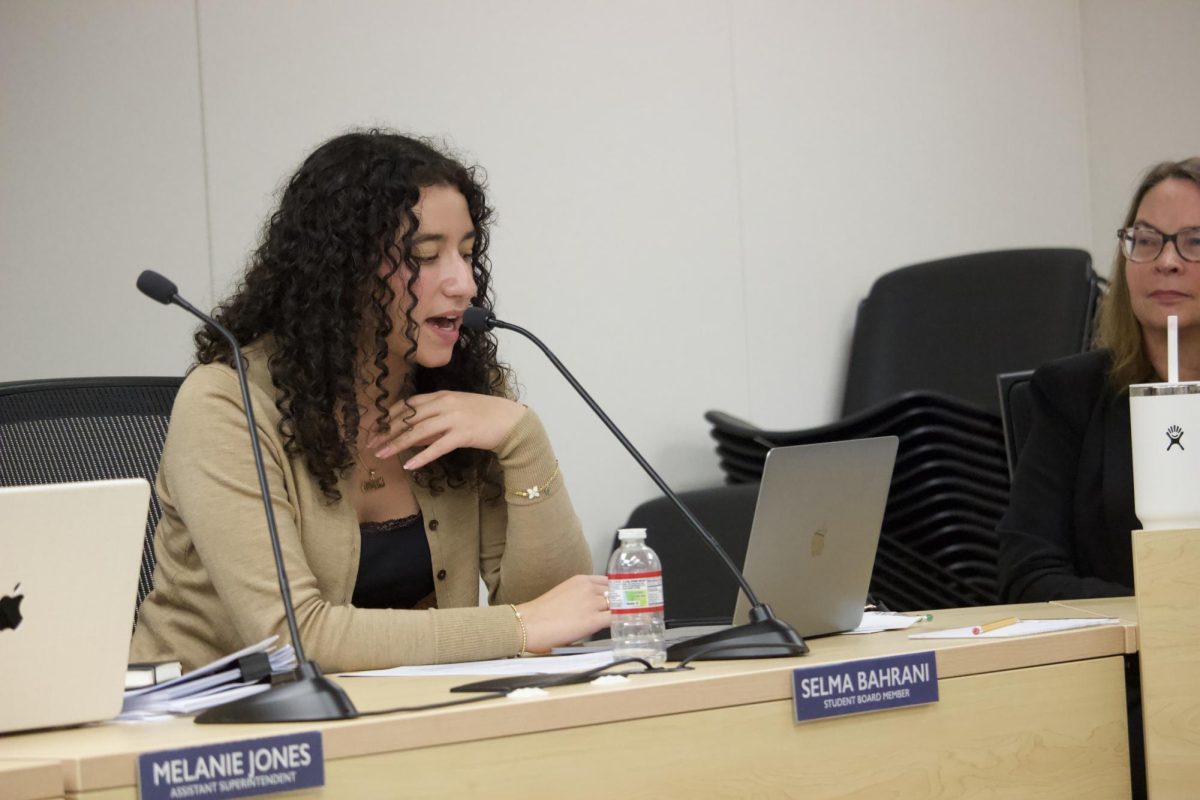
There has been discussion about the proposals among the community for months, not all of which is based on the actual contents of the proposal. SRVUSD Student Board Member Selma Bahrani, a DVHS senior, suggested the changes would not be as dramatic as many teachers and students believe.
“I think there are a lot of misconceptions, especially when people hear big words like ‘grade reform’. People think that ‘oh, the entire grading scale is going to change’, or that people’s GPA is going to be affected,” Bahrani said. “But in reality, the grading reform policy is an attempt to uniformise the grading scale for all schools, every single classroom, to set a policy that everyone can refer back to that ensures that grades really reflect how much you learn inside the classroom, and not other skills that aren’t really relevant to learning.”
Among the most noticed provisions of the policy draft was a section eliminating the use of “plus” and “minus” as an addendum to student grades. For example, a grade of 89% would now represent a B instead of a B+. On the other hand, a 91% would represent an A instead of an A-. DV already disallowed pluses in grading, but some teachers used them nonetheless. The proposed abolition of plus and minus grading altogether has led to mixed reactions from teachers and students.
“If you don’t have pluses or minuses, you know what’s going to happen,” DV English teacher Susannah Faria said. “Somebody’s going to be somewhere on the edge of a B; they want to have an A. No, you should have, at least, pluses and minuses. We should not lower the standards; we should raise the standards.”
On the other hand, some students were optimistic about this alteration, suggesting that it would remove a source of excessive academic pressure on students.
“I was actually pretty happy, because I think that plus and minus adds a lot of stress to people, because sometimes I hear even freshmen being like, ‘Oh, I have a B- or something, I’m so screwed,’” sophomore Dia Koppula said. “But if we just erased that and just had a B, I think it would put less stress on people and it would be easier to get a good grade.”
Faria’s counterpoint was that the change might encourage students to cut corners. Additionally, she believes that it doesn’t address the root issue of grade obsession.
“Everybody wants to get an A,” she said. “Everybody thinks that A means average. No, getting an A should be extremely difficult. It’s not. I will do anything I can if you are struggling, but most of my students get As or Bs, right? Well, that’s silly, because C is average. If I gave a C to a person because they did an average job, it’s fine, [the student’s reaction would be] ‘Aaaaah! I’ve got to have a B!’ Well, then, do B work. Do A work.”
A second item on the agenda is extending the drop period for middle school and high school courses. In the current system, students can only drop a course within the first three weeks of the semester without affecting their transcript; after that point, they’ll receive a no-mark (NM) on their transcript, or potentially even an F. Alternatively, though, under the new regulations, the no-impact period would be extended to five weeks. From then until the 11th week, students could drop and receive a no-mark, with dropping banned in the last seven weeks.
“Like every policy, this has two sides to it. If you extend that period where you can drop off without any penalties, students can honestly say, ‘Yes, we gave it a try and we knew we couldn’t make it’,” DVHS PTSA President Dr. Seema Gahlaut said. “It may give them more time to think about what they really want.”
Gahlaut has spoken extensively with both her PTSA colleagues and DV students about the advantages and shortcomings of the current system. Although she admires the flexibility an extended drop period would give students, she worries they wouldn’t be able to find a new class or TA period, should they leave their previous class months into the school year.
“The reality is, if they drop halfway through the quarter, it’s not just a question of grade. They may not get signed to any other course,” Gahlaut said. “I know of students who did not get a class by the time they dropped, when they tried to drop early on, and there was a gap in their schedule because of that. So the later this stage progresses, the fewer might be the chances. We will accommodate these kids who drop in the middle of the semester. But then, how will they make up in the new class that they’re showing? How will they make up with all the things that have been done?”
The proposal and regulation drafts address a number of other topics as well, some with specific implications at DVHS. One section identifies that, in PE classes, students will no longer be marked down for not wearing a uniform in class. The outfit will still technically be mandatory, but students’ grades will not be lowered if they do not comply.
“I mean, I kind of agree with that, because ultimately, your clothes don’t affect what you do in PE,” Koppula said. “And I personally just don’t like wearing shorts and stuff. I just don’t really like the PE clothes, honestly. If you’re not being graded, why would anybody wear the uniform? I don’t know what they’re trying to ask there. I think they should just make it optional or something.”
Additionally, failing a class due to poor attendance could be marked as ‘I’, instead of a standard F grade. Gahlaut approved, describing attendance transgressions as measurably different from other academic failures.
“For younger kids: definitely, attendance is something that you need to inculcate in them,” Gahlaut said. “School is a place where you learn and you focus and also make friends, and there is peer learning as well, not just from the teacher. It’s good, but by the time you come into high school and you are being told that you should advocate for yourself, you need less parental involvement. By that time, you should probably not focus so much on attendance.”
For all parties – parents, teachers, students and administrators – disagreements remain over some areas of the new regulations. However, SRVUSD offered sessions for public comment on Nov. 20 and Dec. 3, which will be used to revise the policies before implementation next August.
“Feedback gathered will help refine the proposed BP/AR before they are brought to the Board for consideration between February and April,” SRVUSD Communications stated, encouraging the community to share their thoughts. “Please stay tuned for more information in the coming weeks.”
Bahrani is optimistic about the proposals’ potential.
“It’s great that we’re seeing that your grade really reflects how much you learn, and that you’re given fair and equitable chances given to you where you’re able to demonstrate that multiple times throughout the school year,” Bahrani said, “and that other factors like your attendance, your absences or the teacher you get for the class you’re taking aren’t affecting your grade. It’s the whole point of this policy.”