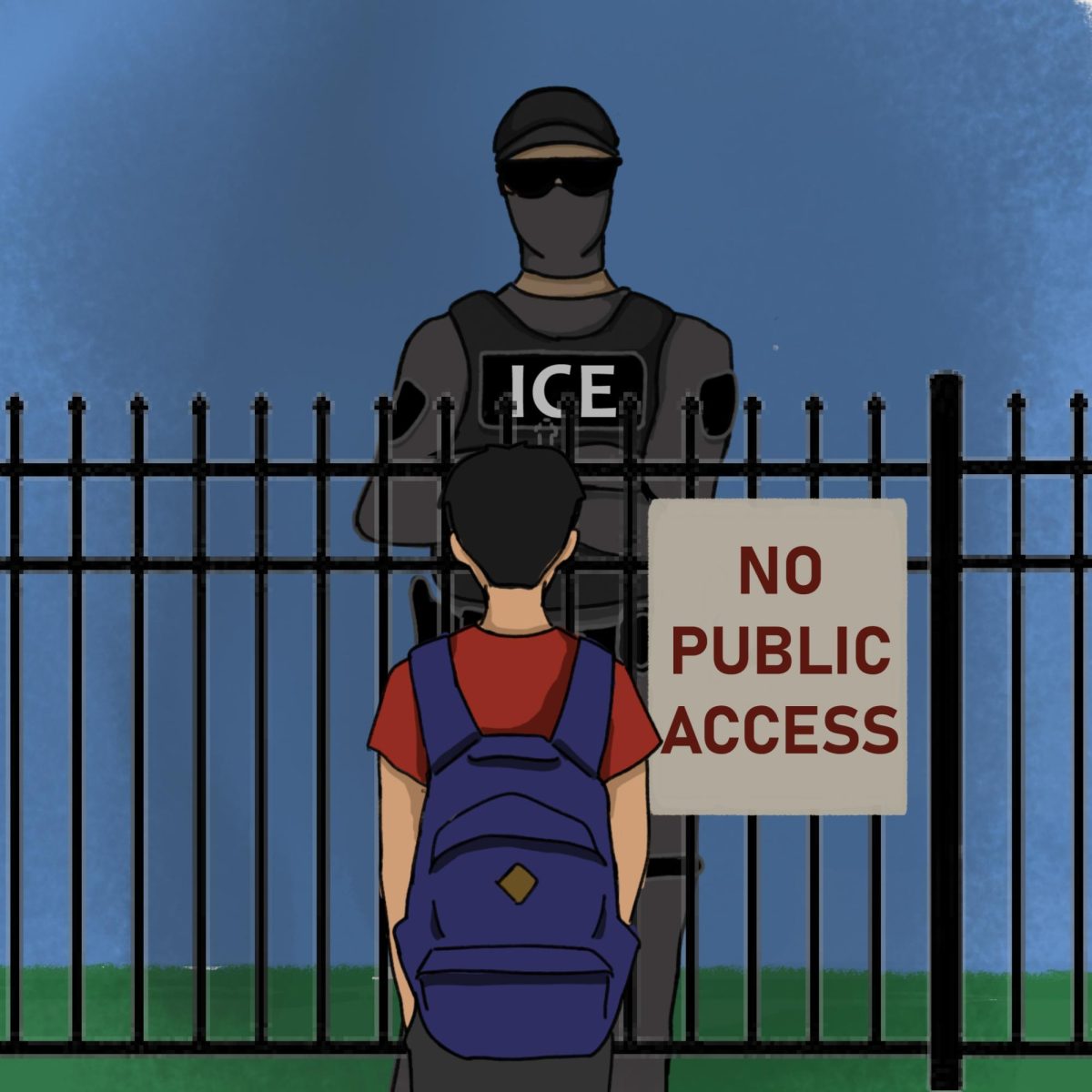
On Sept. 20, 2025, Governor Gavin Newsom implemented Assemblyperson Al Muratsuchi’s California Safe Haven Schools and Child Care Act (AB 49)—legislation that forbids Immigration and Customs Enforcement (ICE) from accessing non-public areas of schools in California without the possession of an official judicial warrant, subpoena, or court order.
The Sending Alerts to Families in Education (SAFE) Act (SB 98) was passed alongside AB 49, requiring school districts to alert staff, families, and students when the presence of immigration enforcement agents on campus is confirmed.
According to the official California Governor’s website, First Partner Jenniffer Sibel Newsom stated, “Our places of learning and healing must never be turned into the hunting grounds this federal administration has tried to make them out to be. California is choosing true public safety. We are implementing the strongest laws in the nation to protect our residents and rejecting this despicable fear.”
Although AB 49 tightens student protection frameworks for the state of California, the intended effect will be more consequential in some areas and less so in others. For SRVUSD and Contra Costa overall, the Act will initiate minimal change in local policy, as confirmed by multiple district administrators.
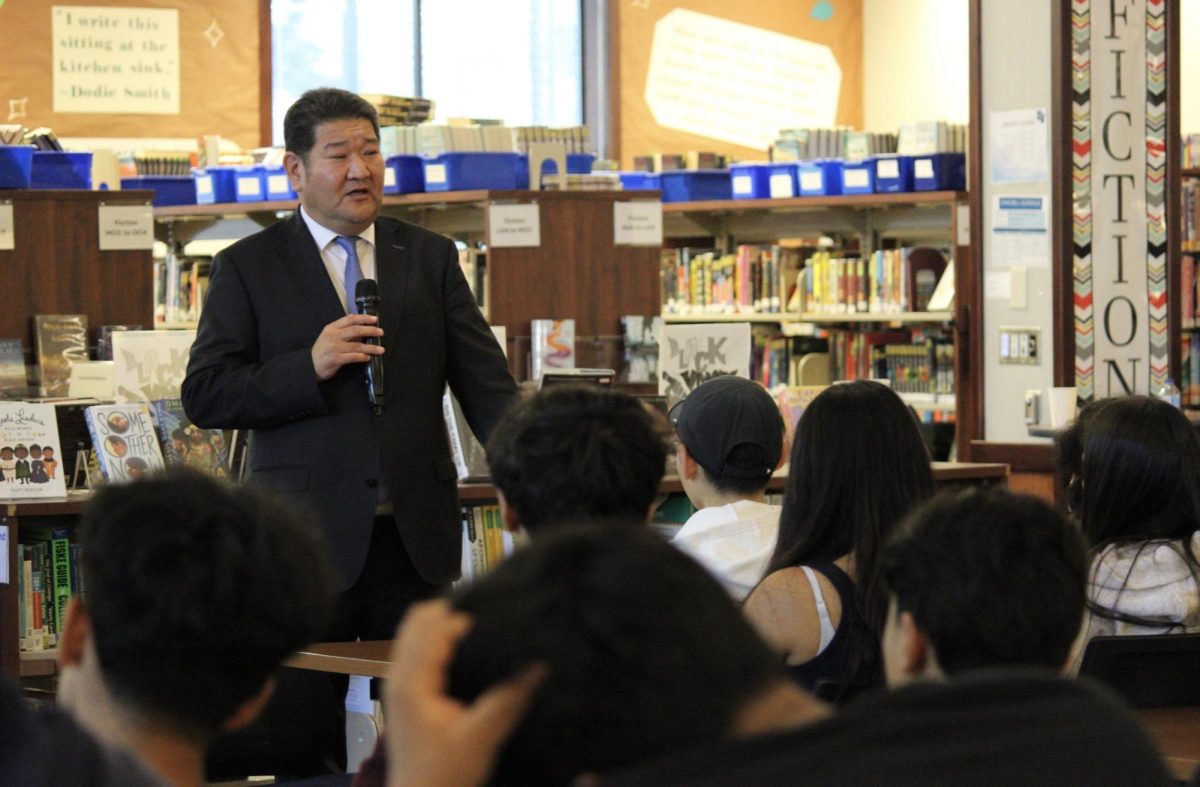
“All the policies and procedures that we already had in place for dealing with any immigration enforcement issue align with AB 49. Our school safety practices were already designed in a way to keep everybody out of our campus that doesn’t need to be there,” SRVUSD Superintendent CJ Cammack said.
At the end of the 2024–25 school year, SRVUSD formalized its practices regarding external personnel on school sites, specifically after becoming aware of increased immigration enforcement activity. Cammack spoke about the “no public access beyond this point” signs plastered around main office lobbies at all schools in the district, relaying that the physical indicators protect the private spaces of students, where principal, assistant principal, and counselor offices tend to be.
To enforce these procedures and others relating to student and staff safety, Cammack leads meetings with principals and office staff once a month where they discuss protocol and train employees. After AB 49 was enacted, school and district staff underwent professional development. They discussed the act’s provisions, how to respond, and practiced playing through scenarios in the case of an incident.
“We had trained our staff that if any immigration officer comes on campus, the only place they can go is to the lobby of the main office, and we are not going to produce information for them,” Cammack explained. “We don’t collect information when we enroll students on their immigration status.”
When asked why the district doesn’t require immigration information, Cammack rationalized that such details aren’t necessary because SRVUSD is a public school system, adding that such information may complicate school practices.
“I don’t think we want that information either, because we have a beautifully diverse community that comes from regions all over the globe. I think it’s better if we just look at every student, we know their name, and then we learn what they need. That’s the focus,” Cammack stressed.
However, because of the choice related to collecting such immigration data, education about immigration rights under this legislation and subsequent bills becomes difficult to spread among students and families. Cammack explained that doing so raises the question of whether the district should undertake the role of informing the San Ramon community of every update related to immigration status and related rights.
Representative Rebecca Bauer-Kahan spoke on the importance of communication from the district. “The best way to disseminate this information is for our local schools to be really communicating to their own communities,” she mentioned. “It doesn’t hurt to provide this information to everybody. Sometimes, somebody who didn’t need that information themselves shares it with a friend who may need it. Casting a broader net would be a good thing.”
SRVUSD and the Contra Costa area haven’t seen any encounters with ICE agents, as established by both the SRVUSD Superintendent and the Contra Costa Superintendent of Schools, Lynn Mackey. While this is positive news, it raises the question of whether school practices will truly be effective.
“Because we haven’t had any issues like this, we haven’t had a way to test where we are,” San Ramon Valley Board of Education Trustee Shelley Clark said.
And yet, various district employees at SRVUSD reaffirmed their commitment to bettering school policies and practices. A key priority of the district, as stated on their website, is students’ social-emotional well-being, which rationalizes the district’s commitment to student and staff safety at school.
“One of our biggest priorities is that you feel safe at school. If you don’t feel safe, you’re not going to be able to learn,” Clark explained.
A way the district plans to ensure students feel safe is by educating students about this bill, though the best method remains undetermined. As Clark mentioned, “I think maybe students are not as aware of the policy as some of the adults are.”
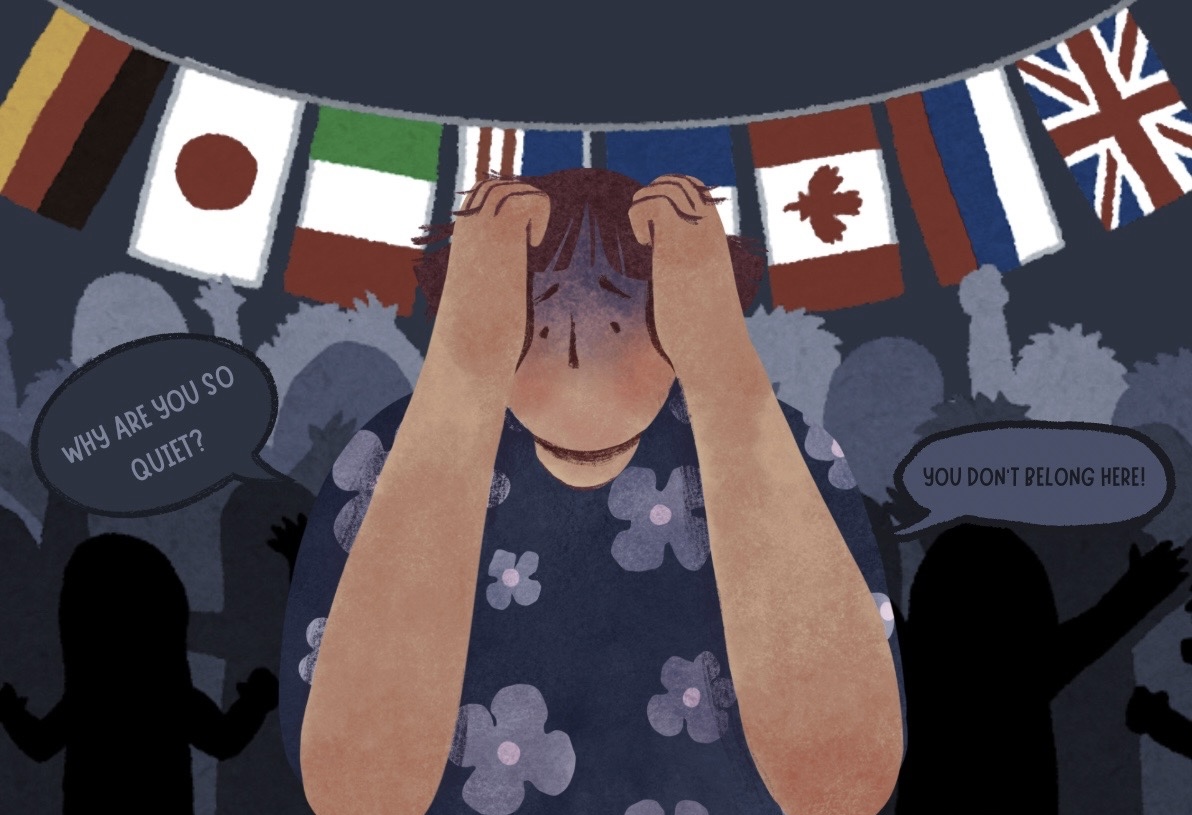
Immigration-related threats have manifested in disparities between students and their peers. These fears have resulted in high rates of anxiety, depression, and academic disengagement, as researched by NYU Press. Such research establishes that the harm of immigration policies transcends undocumented immigrants.
“Students and families have been more worried about their path to and from school. That negatively affects student attendance rates, which then negatively affects student learning,” Cammack stated. “I know of many districts experiencing that, but we haven’t really seen it here.”
While Contra Costa County hasn’t seen any immigration-related incidents yet, no one can confidently confirm that such an immigration raid may not happen in the future or that students may not be affected before or after school hours.
“It’s almost like we can’t overpromise. I don’t want anybody to feel like schools can keep them safe from the moment they step foot outside their front door, and then they get to school,” Mackey said.
However, SRVUSD staff reassure students that schools will do as much as possible to ensure their safety under their jurisdiction.
“I can understand if a student was in that situation, why it would deter them from coming to school,” Clark said. “But we have a policy in place, and we will use that policy to protect them.”
District personnel do not expect issues with compliance regarding the policy in the near future, specifically because Contra Costa is not at a high risk. Being neither a rural nor a large metropolitan area, Contra Costa isn’t regarded as a threat, whereas other parts of the state are. For example, L.A. County—California’s largest metropolitan area—is widely known to house 950,000 undocumented immigrants, or 10% of its population, as explained by the USC Equity Research Institute.
“We haven’t seen any problems in implementing protective measures for student safety,” Cammack said, “so I don’t envision any problems with implementing either AB 49 or SB 98.”