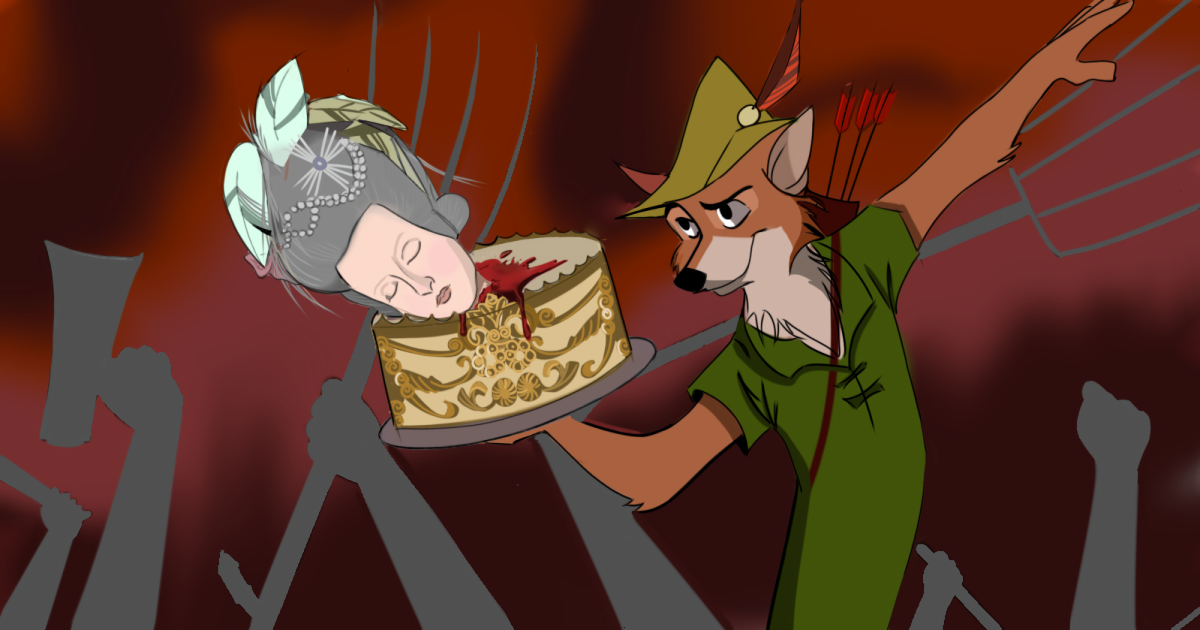
“When the people shall have nothing more to eat, they will eat the rich.”
Jean-Jacques Rousseau penned this quote on the brink of the French Revolution: an era of famine, a crumbling faith in institutions and a ruling class too busy gorging themselves on plentiful feasts to notice the cries of hunger and starvation outside their lavish palaces. But the sentiment – a hot, incandescent hatred for the ostentatious lifestyles and privilege of the wealthy – didn’t die with the aristocrats of 18th-century France.
Today, we all know the ideology by its bite-sized, outrage-fueled descendant: “Eat the rich.” This belief has reverberated through the corridors of history long after, and long before, the era of powdered wigs, guillotines and pitchfork-wielding commonfolk. It lingers, resurfacing in different generations and crises, always carrying the same truth: when society grows so painfully divisive and unequal, people stop believing the system is capable of delivering justice at all.
Enter the vigilante: the lovechild of collective anger and institutional shortcomings, they arrive on the scene brandishing a metaphorical sword, ready to cut down the avaricious elite to size. A beacon of hope for all the disillusioned masses, the vigilante seems to deliver quick ratification for problems that would otherwise take decades, even centuries, to resolve. Reform is instantaneous with these Robin Hood-esque figures fighting at the forefront. Or so we think.
The economic playing field is anything but level. While rent, groceries, student loans and a myriad of expenses eat through people’s paychecks, billionaires amass wealth in amounts most of society cannot even dream of parsing. Those who wield higher influence and power are not held to the same standard as the common man, even in regard to the law. And the institutions that are situated to punish wrongdoings regardless of economic status are increasingly failing at their jobs.
As the wealth gap stretches into something cartoonishly obscene, our collective trust in corporations and public systems plummets. In that vacuum, vigilantes become more than characters — they become proxies, rising as a symbol for people who are tired of waiting, tired of asking, tired of being told to wait patiently for reform while the powerful continue their business as usual.
And this idea, though modernized, echoes the tensions that fueled revolutions for millennia: ordinary people rallying around anyone who seems willing to strike at the ruling class. But when society pours its anger into vigilantes, fueling figures who operate on fury rather than accountability, we aren’t dismantling injustice so much as redefining it according to whoever packs the most symbolic punch. Their version of justice becomes the version we inherit, and it is often enforced through spectacle, force, or violence. And the most unnerving part? We eat it up, absolutely devour it, every single time.
Our love for modern-day Robinhoods couldn’t be more clearly illustrated by our rallying around and public reaction to Luigi Mangione’s alleged retaliation against the corporate greed of America’s medical industry, accused of shooting and killing United Healthcare CEO Brian Thompson in December 2024. Most of the social media discourse blew past the absolute horror of a first-degree murder to express their outrage with the medical insurance system.
Mangione’s crime crystallized a hazy, amorphous issue into a clear moral parable. The whole scene translated to the public in the language of heroes and villains, the brave culture warrior, the Robinhood against a big bad billionaire representative of the 1%. Thompson became a villainous CEO, bleeding Americans high and dry of their money, rather than a human being who was left shot and bleeding out onto the street.
In the public imagination, Mangione became a fairytale prince, with so many celebrating him for taking out a man who was turned into the masthead for a system that failed Americans in many ways. Mangione’s cushy, Ivy League-educated, financially stable lifestyle made him all the more heroic as he was not in the vast majority of people whom the healthcare system did not sustain. In this light, Mangione was revered not for the legality or morality of his actions, but for the symbolic satisfaction to the public. He allegedly took one for the team and struck back, back against a corporation that catered only to the people pouring money into its pockets, ignoring the rest it was designed to serve.
But even though the cheering crowd may have felt as though they had been liberated by this act, the moral compasses were, and still are, skewed. We aren’t dismantling the system to build something that sustains everyone, but more so, remodeling what justice looks like according to whoever can make the flashiest strike against corruption. Whether they assume power in the aftermath or not, their beliefs are projected onto the people. In this case, we as a society chose to view murder as righteous, and while it may have allowed society to attain some form of vindication against a corporation that supposedly failed to provide for them, we are still condoning acts of unimaginable violence as a means to achieve said vindication.
Much like Mangione, the Louvre jewelry heist of Empress Eugenie’s jewels captured public attention in ways that had little to do with the law. A gang of thieves covertly slipped past the security system of the world’s largest cathedral of elite culture, the vault where centuries of wealth are on display for ordinary folk to gawk at behind glass panes. Every piece signifies who has access to this figurative abode of elitism and who doesn’t. By targeting the museum, the robbers didn’t just steal valuables: they punctured a symbol of seemingly untouchable authority and unreachable prestige. Social media took to the stands to applaud the audacity of the crime, mythologizing cleverness into morality. Once again, the story morphed into a symbolic battle between ordinary people versus the inaccessible institution hoarding wealth behind the velvet museum ropes. Overnight, the thieves became anti-establishment icons, their personal motives for the crime obscured by the narrative written by the public, of the powerless striking the powerful where it hurts most. Society was consumed with the fantasy of disruption, a vicarious revenge against the sacrosanct elite. It was an utter triumph over the system designed to keep them out.
Let’s get one thing straight: vigilantes are in no way, shape, or form ethical arbiters. They cherry-pick their targets based on personal vendettas, symbolic gestures, media-friendly narratives, or for reasons completely unbeknownst to us. Their motives aren’t the collective catharsis of society, and even if they were, their methods of doling out justice on behalf of what they believe in are not based on societal consensus. Their violence fails to be democratic or equitable, yet we cheer anyway, hungry for the sense of moral closure the system fails to provide. By raising these figures to a pedestal, we risk letting anger, not accountability, decide what passes for adequate moral action, without addressing systemic problems. By outsourcing justice to vigilantes, we cede control over ethics and effectiveness, over the way we as a whole believe society should run.
Our obsession with vigilantism is a meter for societal decay. It reveals a populace starved of justice, desperate to see someone, anyone, carve out a morsel of equity from the insurmountable buffet of the elite. We watch others feast on symbols of privilege and power, commending each bite as if it will ever nourish our hunger for a just society. When vengeance replaces reform and myth replaces morality, we are not devouring the rich nor this unwinnable system. Instead, we are left scrambling for the crumbs. And no amount of crumbs will ever satiate an appetite for justice this great.