The biggest names in the entertainment industry have now created mini versions of themselves, subject to the criticism of thousands over the age of 25. It seems that society has forgotten that commenting on what a minor wears, how “cringy” their videos may appear, or on the parenting techniques of others, is still out of line, no matter whether the children exist in front of your eyes or on a screen.
One prominent target for criticism is North West, the daughter of Kim Kardashian and Kanye West. The way West chooses to dress seems to be the main target of criticism on social media. On Aug. 24, 2025, West was seen with her mother on a trip in Rome, wearing a black corset and a mini skirt, and many took to social media to comment on how the outfit was too adult-like for such a young girl. Whether or not you agree with Kim “letting” her daughter wear such an outfit, it is no one’s place to comment on a minor’s developing body or a parent’s decisions for their own child. You can attempt to counter this by mentioning cases of abuse or manipulative parenting, but let’s be honest – this is not one of those cases, and you know it.
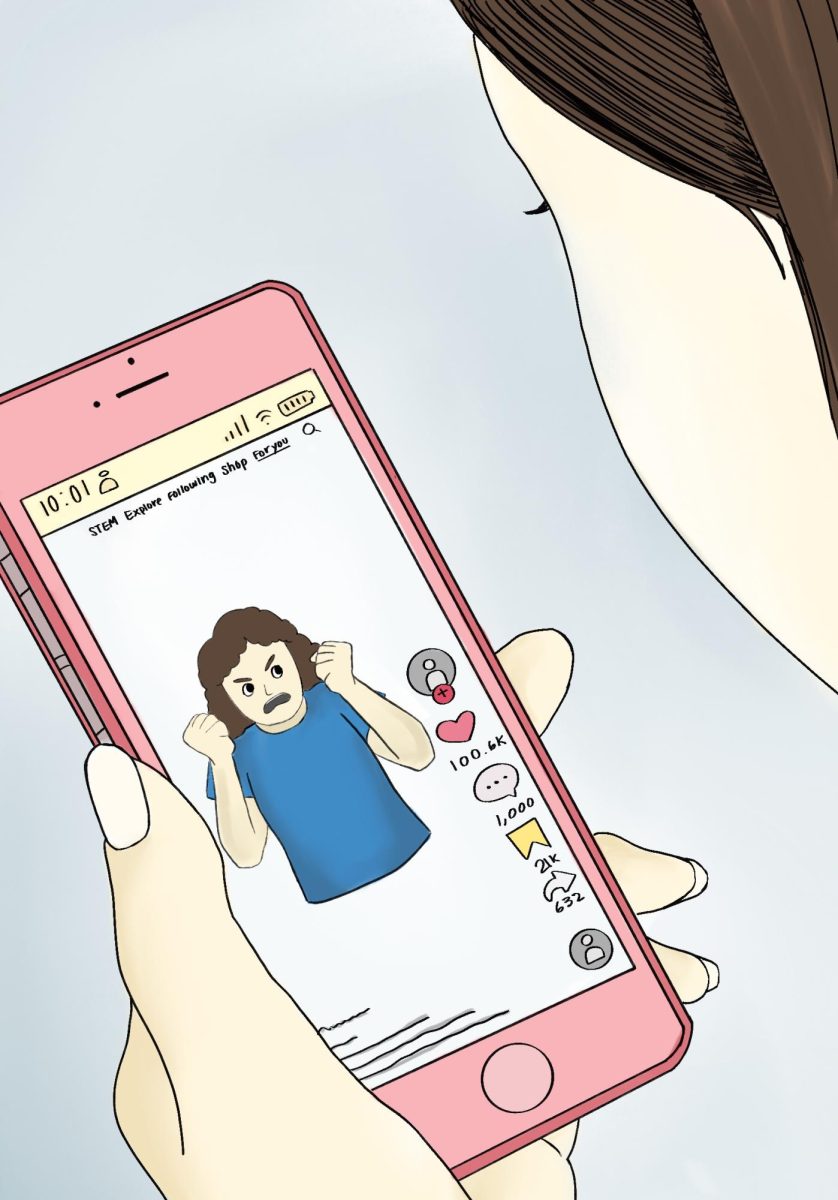
Our society has normalized parasocial relationships through an increased use of social media, with the global user base growing to 5.2 billion in early 2025. Social media users have developed an obsession with the idea that posting a one-minute video on TikTok voicing concern aboutKardashian’s parenting style will miraculously change her behavior. This mindset is not only incredibly naive but also weirdly parasocial.
Another celebrity child sensation is Blue Ivy Carter. As the daughter of Beyoncé and Jay Z, Carter has performed alongside her mother in shows such as the Renaissance World Tour and the Cowboy Carter Tour, where she’s been criticized for both her dancing skills and for performing at all. Commentary on her performance ranges from how she is losing essential parts of her childhood because she is subjected to face such a large audience at a young age, to grown adults commenting on Carter’s performance level and whether she should even be performing at all.
Being overly critical of Blue Ivy’s performance to prove a point about how it isn’t appropriate for her to be performing is rooted in a parasocial need to assert you’re right about something that has entirely no effect on you.
In 2024, Angelina Jolie got matching tattoos with her daughter Vivienne Jolie-Pitt. The tattoo reads “Stay Gold” and serves as a tribute to The Outsiders, a Broadway show they co-produced together. Although many loved the wholesome act, there were also many who felt compelled to note how the parenting decision didn’t “appear” to be Jolie-Pitt’s decision, and accused her mother of “branding” her.
To criticize a mother’s decision to get a matching tattoo with her daughter, and label it as “branding,” dehumanizes their relationship and stakes claims without any basis. The issue lies in how comfortable people have become in commenting on the choices of a mother for her child. If it were a mother someone lived across the street from, people would feel, at the very least, uncomfortable critiquing her parenting decisions to her face, but that discomfort is lost behind the screen. By inserting themselves into what is supposed to be a personal relationship between mother and child, they inherently harm that relationship.
Fundamentally, having thousands of strangers comment on your body, performance, or relationships is already mentally harmful due to the large amount of negative commentary, but for a growing child, this completely warps their perception of their world around them. This can have disastrous effects on their mental health as they grow to become adults. By continuing this parasocial cycle, we justify strangers on the internet commenting on the lives of people they don’t know.