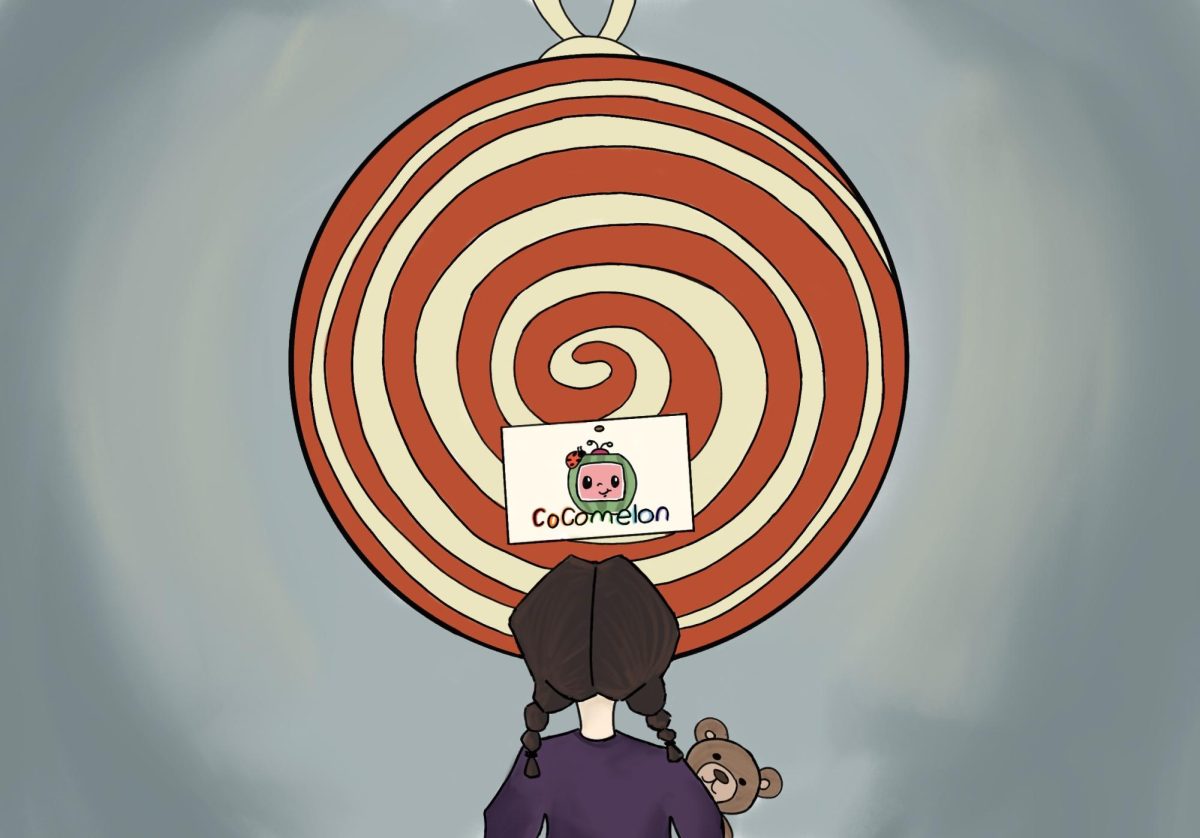
When profit is equivalent to the amount of time users spend watching corporations’ content, they’ll do whatever it takes to kidnap your attention. And the trend gets even more true with children’s media: flashing colors, loud noises, flash cuts galore and a constant stream of overstimulation that’s designed to keep children watching rather than learning.
High-stimulation content has become the norm for almost every single age group for a pretty simple reason: It works. Whether you’re scrolling, for some reason still watching cable or just trying to find something to watch on Netflix, everything is meant to grab your attention and hold onto it with an iron fist.
It’s most apparent in any short-form content app. Creators who don’t trust themselves to earn their audience’s attention turn to “squirrel voice,” doubling the speed of their voice to get viewers to stay just a little bit longer rather than scrolling away. It’s cheap, sure, but again — it works. Given how consumed most of these apps have become due to mass commercialization, there’s a financial incentive to dumb down and speed up content to reach the broadest possible audience. And this type of content is only what’s rewarded by media conglomerates.
Social media reflects how mainstream media treats content. It constantly pushes long-form content aside for shorter, faster and often cheaper alternatives. This just means that actual creatives either get crowded out or are forced to bend the knee instead of making the content they hoped for. When the same large companies that fund almost every aspect of the industry decide what gets pushed, it often means that only content that can turn the quickest is produced. And it targets the most vulnerable to this type of thing as well: kids. It has gotten to the point where this type of content that focuses on feeding a stream of dopamine has caused genuine issues. The more we consume, the more our attention declines.
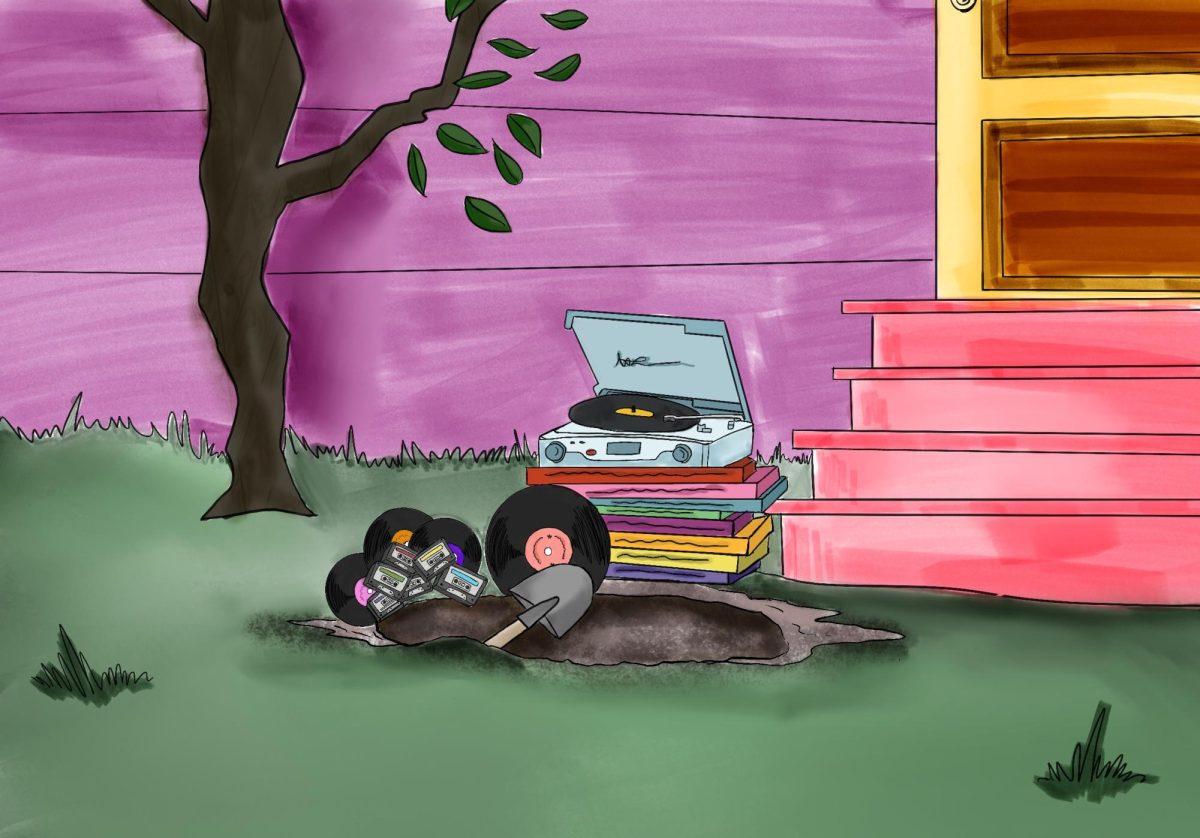
This isn’t to make some grandstanding statement about how all media is now junk and slop with no value, and was all great hits in the years gone by. For example, shows like “Bluey” and “Hilda” are good examples of low-stimulation, engaging content that — while centered towards kids — can still be engaging for many age groups, with lots of time spent building out the world and characters. While shows like “Cocomelon” still stand as behemoths, there are alternative options that put much more trust in their audience to sit, understand and engage with the media.
But while it’s not as if there aren’t plenty of low-stimulation shows and media out there, the bigger problem is that they often get crowded out. It happens in almost every category of media — “BookTok” recommendations fill up shelves, offering quick satisfaction that requires minimal reading comprehension; movies like the newly released “Wuthering Heights” change their content to secure audience appeal, rather than engaging with it in any meaningful way.
It should be genuinely concerning for all of us to realize that the media we surround ourselves with, no matter where we are, has only one focus: getting that quick dopamine hit. It’s not exactly a new phenomenon either; there has always been content, especially kids’ content, that has resorted to this addictive nature to get an audience. It is, however, true that now, compared to past years, this type of content is the most rewarded both financially and viewership-wise.
There is an expectation, at least for adults, that there needs to be content out there that is meant to challenge them mentally, but not so much for kids. Sure, there is still plenty of slop, but the emphasis on having better content is there and is actively rewarded, quite literally. Whether it’s the Oscars or Grammys, there is, at the very least, some recognition. When there is little to no care from media executives about the content they shove out to kids, it shows the extent to which they view children’s content as a means to an end for profit.
That same expectation, however, is not applied to children’s content. There’s a popular line of thinking among both parents and media executives that as long as kids are kept busy, it doesn’t matter what they watch. The content that kids consume can act as good role models just as well as any person can. It’s a disservice to feed children content that’s pure nonsense for hours on end, and then wonder why they struggle to form meaningful bonds or have healthy relationships.
High stimulation content overwhelms kids, nuking their emotional maturity. It’s time to realize that the content we consume isn’t just for entertainment, but also a way for us to engage our minds. When children have that taken away from them, replaced with a constant stream of stimulation for the sake of profit and shareholder value, it tells us that the system never really cared in the first place.