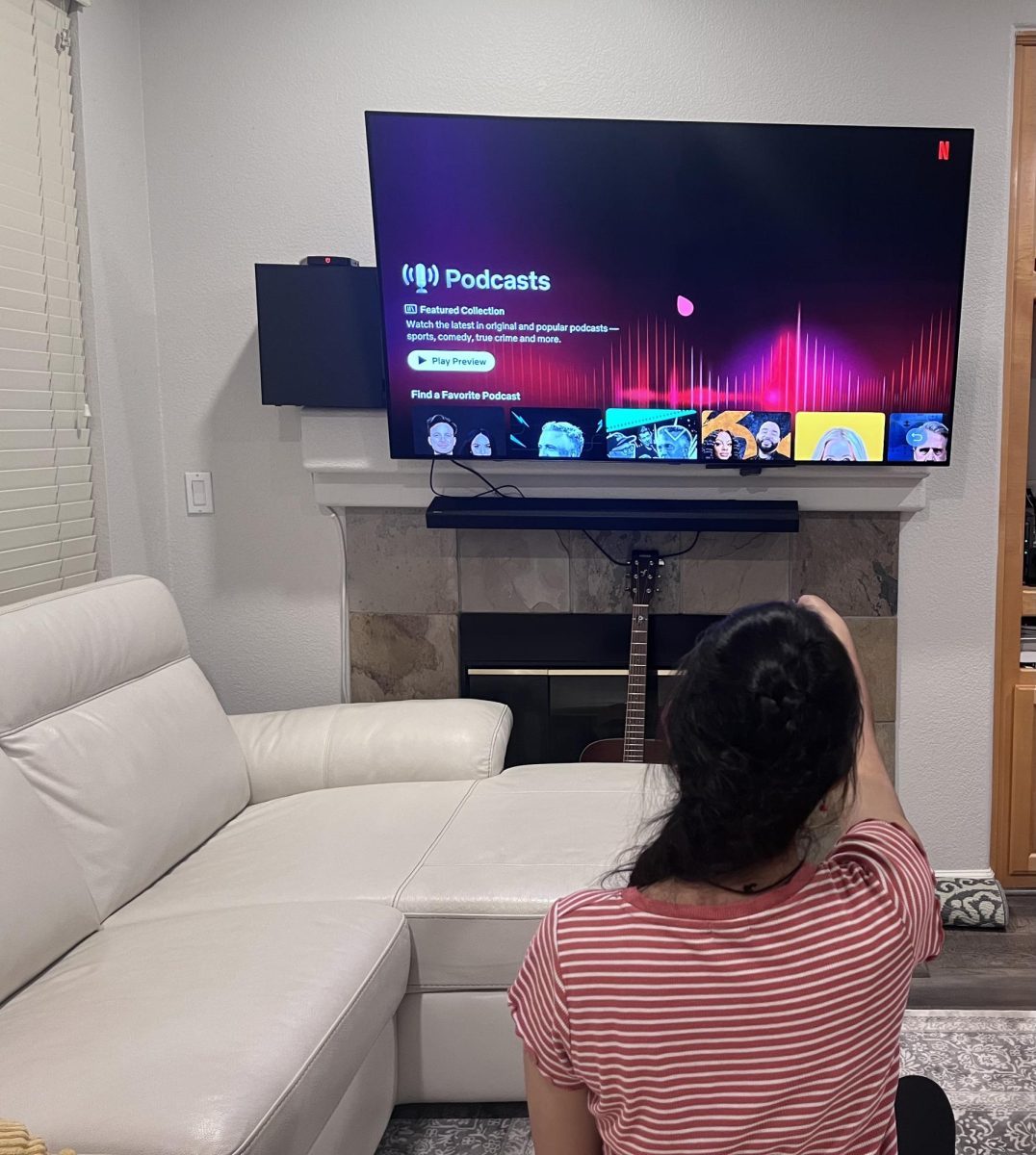
On Oct. 14, 2025, Netflix announced its partnership with Spotify to bring video podcasts to its platform in early 2026. Fast forward to Jan. 11, 2026, the first-ever podcast on Netflix was released (The Bill Simmons Podcast) with many more to follow soon after, including some other big-name podcasts like “The Pete Davidson Show,” “The Ringer Network,” “The Breakfast Club” and many more. Something that most of these podcasts have in common, though, is their slightly right-wing-leaning political commentary. As Netflix is known to be a partisan company that has sent great sums of money to left-wing campaigns in the past, and holds content from both party backgrounds, this sudden shift in direction begs the question: Has Netflix chosen a firm side now, or has their new audience changed the platform’s priorities?
The current rise in the podcasting and content creation space’s massive collaboration with major networks has blurred the line between authenticity and purpose in the meaning behind the fusion of platforms. Netflix has been known to host movies, shows and documentaries on their platform for almost three decades, so this change isn’t something that has been in the works from the start or been done in the network’s past history. However, with podcasts being historically known for mainly audio-based content, by adding the extra layer of video to it, the company believes that it would broaden its audience and reach a larger network of people. They also believe that it gives them the opportunity to connect with the person they’re listening to by giving them a face to see to match the voices they hear and trust. In the 21st century, this extra layer of familiarity is something that a lot of media companies are trying to implement in their own content creation frameworks. Similar to the concept of social media, they are also trying to capitalize on their audience’s tendencies to doomscroll and capture their attention through that method. According to Harvard Health, around 31-43% adults engage in doomscrolling, with a continued surge in media engagement. For this reason, Netflix and other companies are almost guaranteed a profit as there will always be someone consuming content rapidly, especially if it has a video side to it and is short-form.
It’s important to note that any company, regardless of whether it’s an entertainment-based one or not, is fueled by the monetary aspect of its business. For this reason, when looking at a company’s political leanings, the desire for money and fame within the realm of creation can often overwhelm platforms, leading them to go in the direction of the money trail. This doesn’t necessarily mean that they might make a sudden shift from being completely right-wing to left-wing or vice versa. Instead, it could potentially involve experimenting with different types of demographic-based content to garner new audiences and broaden the Netflix audience network. After all, streaming services like Netflix no longer act as just distributors, as they now also host their own original content and operate their own management companies. This allows them to be given newfound value and grants them the same credibility as a standalone creator, if not more, through their very public way of shaping conversations in the media space. As a result, it can lead to first amendment violation or potential censorship down the line if the content being produced isn’t up to their designated vision and standards.
This can further fuel competition that makes Netflix also compete for attention with all sorts of companies like Spotify, Amazon Prime, YouTube and more. Most importantly, as a way to stand out in the crowd, they came to the realization that politically-based episodes and content fueled more conversation and had an increased number of audience members tuning in. However, rather than capitalizing on it, they realized they wanted to focus on other forms of content instead. Having more of this sort of content may not seem bad in theory, but in practice, it emphasizes the way politics is making its way into the media, creating more confusion and controversy in the process. Additionally, bringing podcasts onto Netflix’s platform expands their company makeup and, instead of just being a place for standard content, it also has podcasts that can help reach younger audiences who are already attracted by the particular podcast’s content or are interested in the topics being discussed. Due to this, children are often exposed to polarizing content that isn’t rooted in reality and leads them to believe in half-truths.
At the end of the day, the question may not even be about whether Netflix is choosing a side or not, but rather if having neutral political views is even possible when money is the main goal. As podcasts move from being made available only on Spotify-type platforms to places like Netflix, it allows people to decide for themselves if they want to opt for audio only or also be able to see video without worrying about the political aspect of it. This is just the beginning of a new era for the podcasting section and the entertainment industry as a whole!