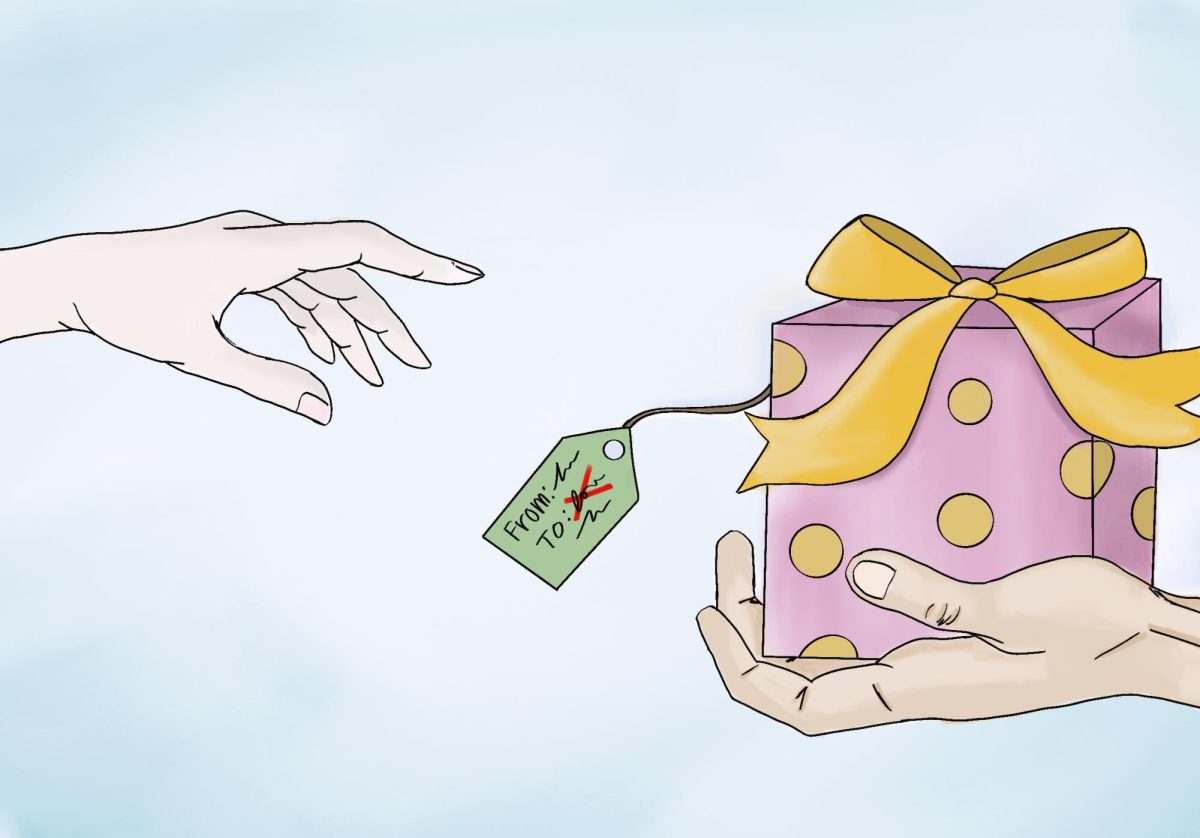
Last Christmas, my mom received a Japanese pagoda puzzle set that she wasn’t quite sure what to do with. She ended up regifting it to me, and what didn’t work out for her turned out to be the perfect present for me. That small handoff made me wonder whether regifting truly deserves its reputation.
There’s a stigma surrounding regifting — the idea that giving away presents meant for ourselves is disrespectful to the giver. But the truth is, if passing on an unwanted item will make someone else happier than it will make you, then why not let people regift as they please? Once the gift falls into the hands of the recipient, they should feel free to do whatever they want with it, so long as they express their gratitude to the original gifter for their time and effort. Whether the recipient actually uses, tosses or regifts the item is entirely up to them.
Regifting also has a practical side. In 2024, Americans were expected to spend $10.1 billion on unwanted gifts that holiday season, with about 53% of U.S. adults being left disappointed by at least one present they unwrapped that year. Besides the dismay at underwhelming gifts, the potential landfill that $10.1 billion equated to could have been diminished with the simple act of giving an already-owned present to someone else. Regifting is its own form of recycling.
Plus, passing a gift forward can hold even more meaning than buying one from a store. Matching an item to another person requires a surprising amount of care and is more thoughtful than grabbing the first pair of holiday socks you see on the shelves. In fact, clothes and accessories are generally the least wished-for gifts.
Not only does the practice divert goods from the landfill, but it also helps clear clutter at home. Without regifting, all those unwanted gifts we receive will end up trashed or gathering dust in the closet. Giving away your unwanted gifts puts perfectly good items back into circulation, benefiting both the environment and yourself.
Regifting isn’t tossing your trash to someone else to deal with — although it might seem that way at first. It’s a compliment. You are choosing to bestow a gift unfit for you onto someone else, and giving it another chance for life at its new home. This is, of course, assuming the gift is being given with careful thought and good intentions. My mom could have passed on that pagoda puzzle set to any other family member or friend if she wanted to, but she chose to give it to me — a gift carefully matched to my interests. She saw the value the gift had in another person’s hands rather than in her own. After all, one man’s trash is another man’s treasure.
However, you do need some degree of caution when choosing which items to regift. Lazy regifting is obvious and blatantly disrespectful to the original gifter. Handmade or personalized items, such as a hand-crocheted blanket or a custom-designed photo album, carry sentimental value, and regifting them can easily upset the balance between practicality and what we owe emotionally to the gift. No one wants any ill-fitting clothing, impersonal books or other generic gifts that lack genuine thought. Gift cards, jewelry and other useful items, on the other hand, are great secondhand presents. If you just use common sense, there is no harm in regifting.
Regifting has long been a delicate topic, and the stigma of breaking social etiquette by doing so is still engraved in our minds to this day. But following that same stigma would have left my mom with an unopened, dusty puzzle set and, for me, a much blander Christmas that year. If passing along a gift can bring a little joy into someone else’s life, it’s worth considering. I’d even go as far as to say that regifting embodies the true spirit of Christmas.