For the Fall 2025 Semester, DVHS Drama has chosen to perform “The Laramie Project.” The play compiles a series of interviews that take place in the town of Laramie, Wyoming, where the murder of Matthew Shepherd, a 21-year-old gay man, took place. It covers the town’s reactions to the hate crime and the media storm that followed.
The production has already begun to prompt conversations within the cast, who hope that it will continue to spark greater discussion within the student body, considering the current polarizing political climate. President Trump has passed numerous executive orders to undermine youth in the LGBTQ community, such as “Ending Radical Indoctrination in K-12 Schooling” and “Protecting Children From Chemical and Surgical Mutilation.” Today, the nation seems to have grown indifferent to the struggles of the LGBTQ community under the assumption that they’ve become “more accepting” when continuous discrimination against the community is still prevalent.
Paul Vega, DV Drama’s director, explains how he chose this production so the audience could understand how “heated speech can have a negative impact, but banding together to fight can bring positive change.”
The production was initially performed at DV in 2011, with the purpose of demonstrating that theatre could be used as a platform to amplify voices silenced in society. During a period when simply talking about the LGBTQ community was considered taboo, the play showed support for students struggling with being open and proud about their identity. Now, Vega has chosen to have it return to the DV stage due to the increased negative commentary against the LGBTQ community and other minorities, which has been amplified in the media and the country as a whole.
“There’s a lot of conservatism in the area where they can believe that the loudest voice wins, and we want people to not just listen to the loudest voice but listen to all voices so that a decision can be made,” Vega explained.
The production has also prompted discussion on political violence and extremism. After the recent murder of Charlie Kirk, a republican political activist, the cast had a lengthy discussion regarding the newfound acceptance of violence as a means to prove a point in America’s current political climate.
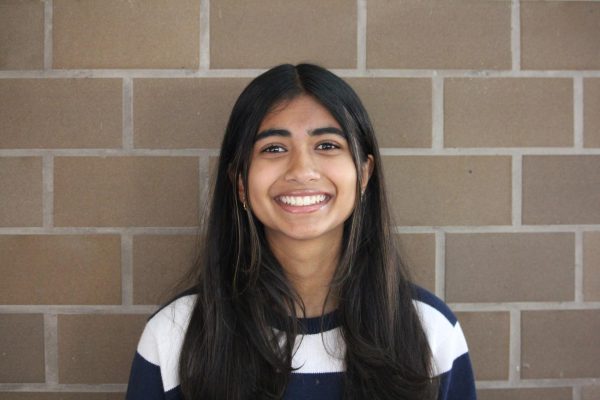
Senior Akash Bardalai, a cast member in this production, explained how he wants people to see that, “when a person dies in the news, they are not just a symbol of whatever political opinion[they had]…they’re never just a symbol. They’re a human being with a backstory.”
Bardalai believes that both the right and the left have increased their acceptance of violence as a means to further their own agenda. He noted that the play shows people that Matthew Shephard was not just another statistic by displaying the relationships that he built over the course of his life. As political violence and the justification for it have increased tenfold, the play implores its audience to understand the life that was lost, no matter what community they were a part of.
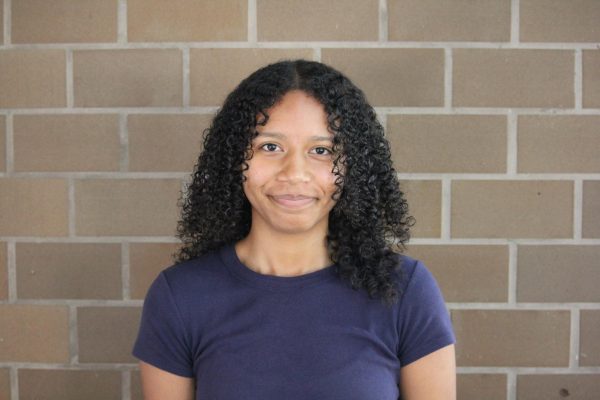
Senior Jhace Parson, and one of the stage managers for the production, noted how DV, despite appearing as a more liberal school, is actually quite the opposite. She explained how students “don’t have that respect or that humanization of queer people.”
Specifically, Parson observed that students at DV turn a blind eye towards the blatant disrespect of gay people. The school community refuses to acknowledge the struggles of the LGBTQ community and believes that a lack of violence inherently means that those struggles no longer exist. Parson explains that this is why DV’s production of “The Laramie Project” is so important, because it amplifies the voices of those who do not “understand” what it means to be gay and how they come together to support each other.
Senior Lauren Quimson, a cast member, explained how, “there are so many important messages in the show that people really need to come watch…and reflect on for society today.”
The production is meant to amplify the voices of the LGBTQ community and all minorities at DV that are struggling to be heard at a school that has numerous cases of ignoring their struggles. Many at DV believe that the issues of minorities exist for the protection of DV, but the prejudice is very much alive, even if it may not be extremist. Although Dougherty has come a long way in terms of representation and providing spaces for students to be open about their identities, this production indicates how the school still falls short in terms of support and genuinely hearing the stories of their peers.