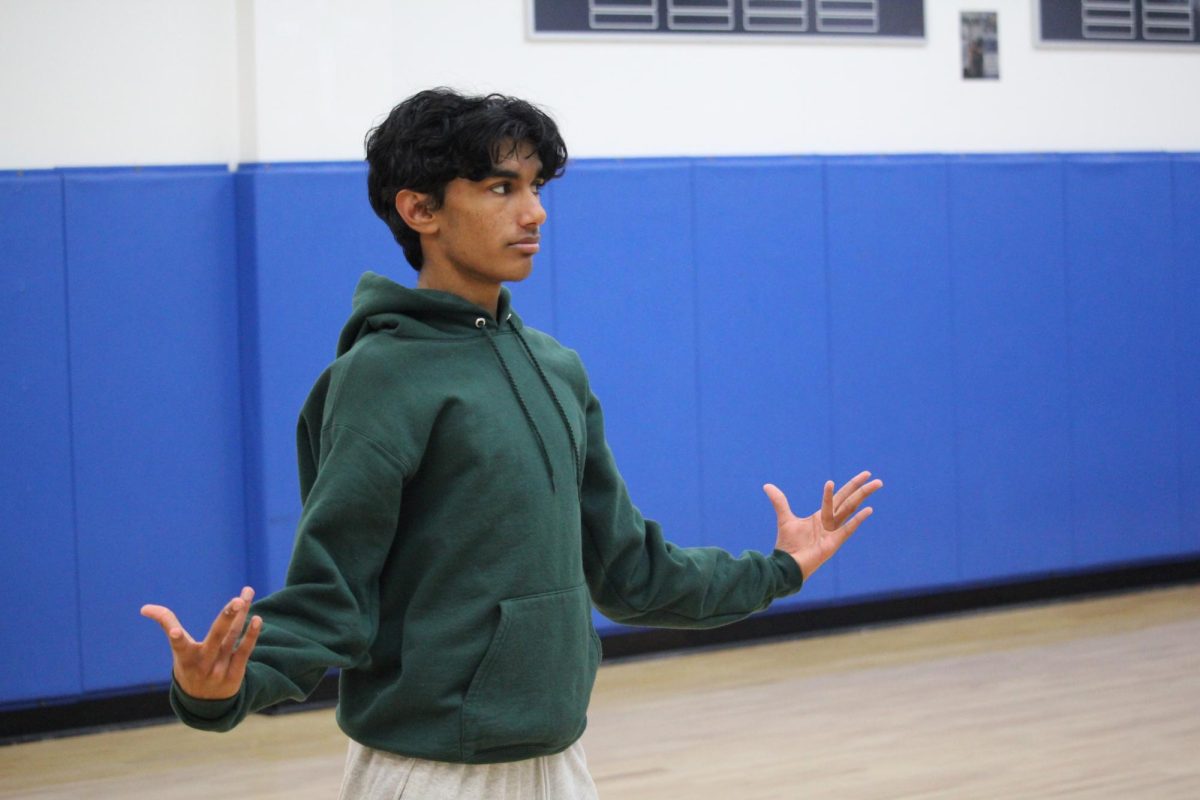
Harsh stigmas around men doing dance as an activity, sport and performance exist within the sport. This year, two freshmen, Anvay Nigam and Logan Kang, have joined the DVHS dance team and aim to tackle this stigma.
“It’s always been looked at with male dancers being feminine. Too feminine if they participate in dance, which is a shame, because it is such an amazing sport,” DVHS Dance Director Ramona Altman explained. “It’s an art form. I wish more people would appreciate it.”
Nigam began his journey with dance in second grade at San Ramon Valley Dance Academy. He was eventually forced to quit due to the COVID-19 pandemic, but he decided to get back into it after finding out about auditions taking place for the DVHS team. Nigam also participates in cross country, expressing that dance is very different compared to how other sports operate.
“Dance, as with a lot of different sports, requires a lot of practice. You need to practice to control your body in a certain way. But something that I think makes dance different from other sports is the fact that we have to look good while doing it, even though we might be suffering,” Nigam said.
The physical side of the sport plays a large part in what makes dance so difficult.
“Certain genres of dance are very physically tolling, for example, ballet is the definition of beauty is pain,” Nigam added.
Another freshman on the team, Logan Kang, began his time with the sport when he was five years old at his dance studio. He focuses on many styles, including jazz, ballet, tap and hip-hop. Being a basketball and soccer player as well, he compares the physicality of dance to other sports.
“I think dance has a lot more training than other sports. For me at least, I have a class basically every single day, and sometimes more than just one. But in my other sports I only had like one or two practices a week,” Kang said.
For men, the sport is often looked down upon due to it being a performance-centered activity. This stigma often discourages men who might want to join, but are scared of being judged.
“I, as a person, never really saw or understood the reason why men weren’t being represented or just participating in more performing sports because of their gender. It doesn’t matter when you’re doing something that’s so universal, and something beautiful that brings people together, just like any other sport would. I think that there have been a lot of stigmas against men in performing roles just in recent years.” Nigam responded.
However, this hasn’t always been the case.
“Actually, years and years ago, before Covid, I did have a big group of males performing in the show. I never had to question whether or not I would have males in the program or not. I just knew I always would. And for some reason after [COVID-19], it just kind of stopped. But I’m lucky this year that I have two in my class, and it’s been great.” Altman added on.
Similar ideas were also discussed by Kang, that while not a lot can be done to really fix the stigma, it’s important to show people the beauty of the sport.
“It’s very much a movement- and performance-based activity, and I think the movement is what makes a lot of people think it’s more a women-based sport. I don’t know if there’s anything you can do about it to change that, except just be like ‘hey, there’s really cool guys out there doing this,’” Kang added on
The notion about dance being an extremely hard activity to break into is quite a common one, however both Kang and Nigam agreed that no matter when or where a person starts off in their dancing career, there is always a way to improve.
“When I was young, I only did dance for about two years max, and I took a major break before I got back into it. Anybody can learn how to dance. Honestly, you can start at any level, and you can progress as far as you want,” Nigam said.
Kang expressed very similar thoughts as well, that to be good at dance is something anybody can achieve, but also something that is very mentally demanding.
“As long as you work hard enough, you can overcome those fears of not feeling good enough to start now. I know a few people who are now professionals who started when they were in high school, and some were even in college,” Kang explained.
Altman had a different take on the difficulty of entering dance as a sport.
“If you’re going into it as a hobby, as something fun to do […] I think it’s totally okay to start whenever you want to. I have a lot of kids in the program that just started in high school. Now, if you’re looking to compete at a high level, then yes, it is difficult to start at a later age. It just depends on what you want to do with dance,” Altman said.
Whether dance is something that a person has done since childhood, or something they have just begun, the climb up to the top remains the same. While it may seem that the attitude that often surrounds dance, when it comes to men entering the activity, is quite unwelcoming, there is always a way to break out of the preset conclusion that people have placed.
“If you’re really passionate about it, you can definitely go a long way with dance, no matter where you start,“ Nigam concluded.